Different Energy
The fastest person should not set the whole pace.
Walking, heat, early starts and long travel days can affect family members differently.
Thrill My Guide Travel Intelligence
A family is not one average traveller.
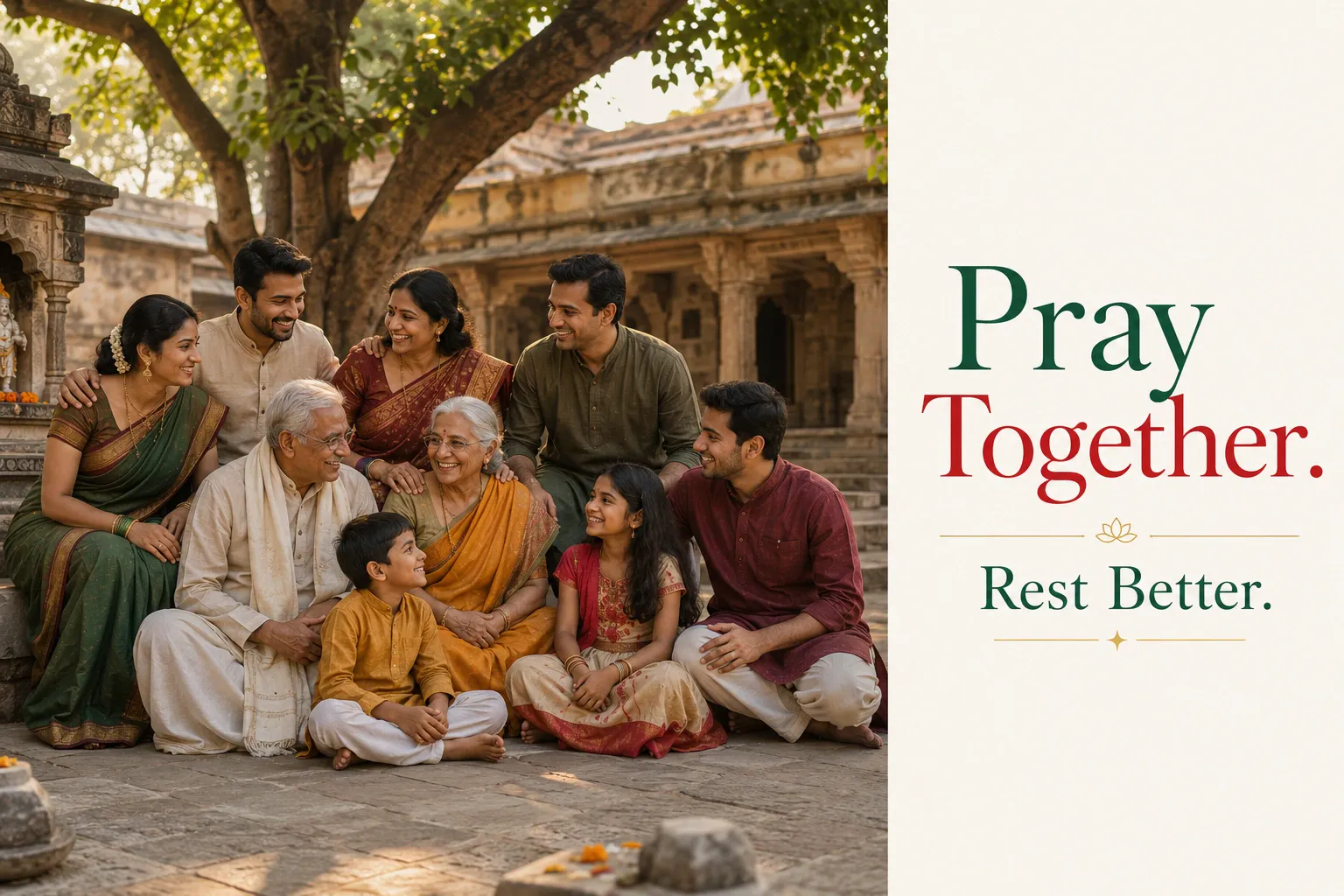
Children, parents and senior family members can share the same destination while having very different energy, mobility, food, sleep, comfort and experience needs.
A good family journey should not optimise for the fastest or most energetic person. It should work across the people who are actually travelling.
Parents
Senior travellers
Family pace
Usable family time
Start With The Family
A parent may be coordinating everyone. A child may need food or rest earlier. A senior traveller may care more about walking, seating and waiting. Another family member may have one experience they especially want from the trip.
The fastest person should not set the whole pace.
Walking, heat, early starts and long travel days can affect family members differently.
Everyone may be travelling for a different reason.
Pilgrimage, food, rest, celebration, family time and sightseeing can all matter within one booking.
Small details can affect the entire day.
Meal timing, washrooms, room configuration, stairs, vehicle comfort and rest stops can become major journey decisions.
Design for the group, not the average.
The useful itinerary reflects shared priorities while respecting important individual limits.
instead of asking only “Where should our family go?”, ask “What needs to be true for this journey to work for the people coming with us?”
The Family Journey Map
Who is travelling?
Children, adults, senior parents and anyone with a practical need that can change the journey.
What can the day realistically hold?
Walking, early starts, road time and heat can matter more than the number of attractions.
When does the family need to pause?
Meal timing, hydration and rest windows can protect the quality of the remaining day.
What physical effort is involved?
Walking, stairs, queues, vehicle access, seating and washrooms can affect whether the plan is usable.
How should the family stay?
Room configuration, hotel location and privacy needs can matter as much as the star category.
What should each person get from the trip?
Giving each family member one visible priority can make the compromises more thoughtful.
One Useful Rule
Everyone does not need the same priority, but everyone should be visible in the plan.
Children Are Not Small Adults
Long waits, unfamiliar food, heat, repeated transfers and late evenings can affect children differently from adults. The useful response is not to remove every challenge. It is to make the overall day realistic.
Meal timing matters
A late lunch or long gap between meals can make the rest of the itinerary harder for the whole family.
Recovery is part of the day
A rest period can protect the quality of the evening rather than being treated as wasted travel time.
More stops are not always more engaging
One memorable activity can sometimes be more useful than several rushed stops.
Design around the real child
Age, routine, food, energy and interests should be understood from the family rather than assumed from a generic child friendly label.
“family friendly” is not enough information. The useful question is what this particular child needs for the day to remain workable.
Travelling With Senior Parents
A senior traveller may be comfortable walking a certain distance but still find repeated standing, stairs, long queues or difficult vehicle access tiring. Useful planning looks at the whole day rather than one mobility label.
Consider total walking across the day, not only the distance at one attraction.
Standing time and uncertain queues can matter as much as distance.
Rest opportunities can change how manageable the next part of the day feels.
Route and stop planning should include practical facilities, not only attractions.
Pick up points and how close a vehicle can reasonably reach may affect the route.
A conveniently located hotel can sometimes be more useful than a higher category property farther away.
Family Pace
A full day may be completely suitable for one family. Another may need fewer stops, longer meals or a hotel break. There is no universally correct pace.
Journey load | What to examine | Possible response |
|---|---|---|
| Early morning start | Previous night’s sleep and next day’s activity load | Protect the evening before or lighten the period after |
| Long road movement | Sitting time, breaks and whether the destination addition is important | Add only when the experience justifies the effort |
| Heavy walking | Children, senior parents, heat and waiting | Reduce nearby stops or create a rest window |
| Multiple attractions | Which stops are genuinely important to the family | Protect priority experiences and remove weaker ones |
| Late evening plan | Children’s routine and next morning’s start | Keep the evening flexible when the following morning matters more |
Family Pace Principle
The best pace is the one that protects the experiences the family values without exhausting the people the journey is meant for.
Usable Family Time
Arrival, departure, check in, road travel, meals, sleep and recovery all use time. Family planning becomes clearer when the itinerary is built around usable hours instead of only nights booked.
Count What The Family Can Actually Use
A morning arrival and a late evening arrival should not produce the same first day plan.
Two hours on the road is still two hours of the family’s travel day.
Rest after a demanding morning can protect the usefulness of the evening.
The goal is not to fill every available hour. It is to protect enough usable time for the experiences that matter.
when comparing two family journeys, compare how much meaningful and comfortable family time remains after the logistics are counted.
Everyone Gets One Priority
One simple planning approach is to identify at least one meaningful priority for each traveller, then build the shared journey around the overlaps and the tradeoffs.
A desert experience, pool time, favourite food or simply enough time to play.
A meaningful sight, a comfortable hotel, family photographs or less coordination during the trip.
A particular darshan, temple, family moment or simply a journey that does not feel physically punishing.
The experience everyone wants enough to protect together.
thoughtful family travel can create better conditions for shared experience. It cannot guarantee family bonding, emotional wellbeing or a lasting change in family relationships.
Family Comfort Is Practical
A premium room far from the places a family needs to visit can create more road time. A well located hotel, suitable rooms, reliable transport and realistic meal planning may contribute more to the actual journey.
Reduce repeated movement
A useful hotel location can reduce road time, coordination and unnecessary energy loss.
Room configuration matters
Family rooms, nearby rooms, privacy and sleeping arrangements can affect whether the stay feels practical.
Comfort continues outside the hotel
Vehicle space, road time, pick up planning and luggage can matter across the entire family day.
Spend where friction falls
For some families, paying more is useful when it saves meaningful time, reduces movement or improves the conditions everyone actually uses.
not “How luxurious is this?” but “Which comforts make this journey meaningfully easier for this family?”
When Family Time Is Scarce
When leave is limited, the hidden cost of a journey can be repeated planning, difficult connections, unnecessary road movement and decisions that continue throughout the trip.
The useful goal is not automatically to fit more into fewer days. It is to protect the parts of the journey the family will actually value.
Resolve important transport, hotel and priority activity decisions before arrival.
Remove activities that add movement without adding enough value to the family.
Give the experiences that matter enough time instead of treating them as another item to complete.
Applied Example: Ujjain
In Ujjain, Mahakaleshwar may be the main reason for the journey. Family planning still needs to account for arrival time, children, senior parents, walking, rest, meals, hotel location and whether additional sacred stops fit the available time.
Protect the family’s primary darshan instead of risking it by filling the day with lower priority stops first.
An early or demanding sacred priority can affect sleep, reporting time, transport and how much should be planned afterwards.
Walking, waiting, access, seating, hotel location and recovery time can move higher in the planning order.
Meal timing, waiting and rest may change how the wider temple circuit should be sequenced.
Compare the additional road effort with the family’s usable time, energy and importance of the wider pilgrimage circuit.
time sensitive access, registration, reporting requirements and local arrangements should be checked from current official guidance for the family’s travel date.
Family Travel Evidence
Family travel research has examined travel experiences, relationships and the potential benefits people report or experience around shared travel. Those findings are useful for asking better design questions, not for guaranteeing bonding, wellbeing or lasting family change.
Family And Relationship Benefits Of Travel Experiences
Durko and Petrick reviewed existing research relating travel experiences to adults, couples, families and extended family members.
Before The Destination
Thrill My Guide’s synthesis on what travel may support and what a journey should not claim to guarantee.
Travel Personalisation Research
Why several travellers should not be reduced to one average preference when a journey is recommended.
Thrill My Guide Travel Standards
The framework used to distinguish external evidence, TMG synthesis, practical experience and claims that should remain bounded.
family travel research can help identify potentially valuable conditions and experiences. It does not prove that a particular holiday will strengthen a particular family, improve wellbeing or create a permanent family outcome.
From Research To A Better Family Trip
The value of Travel Discovery is not simply asking more questions. It is whether those answers change the practical journey.
Identify the people
Ages, family structure and any practical needs that can affect the journey.
Find the shared reason
Understand what the family most wants this journey to make possible.
Give everyone visibility
Protect important individual priorities and limits rather than averaging them away.
Count the real load
Include transfers, walking, queues, meals, sleep and recovery in the itinerary.
Build the journey
Choose the route, pace, comfort and experiences that fit the actual family.
A family journey does not need to give everyone everything. It should make the important compromises visible before the family has to live through them.
Responsible Family Travel Claims
Thoughtful planning can reduce unnecessary friction, protect meaningful experiences and make the journey more usable across different family members. What the family feels or carries home cannot be promised in advance.
Responsible
Reduce practical friction
Better sequencing, realistic transfers, suitable hotels and clear priorities can make family travel easier to navigate.
Responsible
Protect shared experiences
The itinerary can leave enough time and energy for moments the family has said matter.
Not Responsible
Promise family bonding
Shared travel can create opportunities for time together, but it cannot guarantee stronger family relationships.
Not Responsible
Promise wellbeing or lasting change
A journey should not be sold as a guaranteed emotional, behavioural or long term family intervention.
TMG Family Travel Principle
Design for the people who are travelling. Protect the conditions. Do not promise the emotional result.
Travel Intelligence Research Cluster
The Travel Intelligence cluster connects research about travel with personalisation, different traveller groups, pilgrimage, pace and the provenance of journey design.
Why Travel Works
Recovery, novelty, connection, meaning and responsible travel claims.
Travel Discovery Methodology
How purpose, people, time, pace, comfort and constraints become journey criteria.
Travel Personalisation Research
How context can improve fit without becoming profiling or prediction.
Couple Travel Research
Shared novelty, protected time, different preferences and couple journey fit.
Family Travel Research
Children, parents, seniors, usable family time and multigenerational journey design.
Pilgrimage And Meaning Research
Faith, ritual, sacred travel, meaning and evidence boundaries.
Travel Pace And Fatigue
Sleep, walking, queues, transfers and the real load of a journey.
Creator Journey Research
How first hand creator experience can inform a journey without guaranteeing the next traveller’s outcome.
Questions Families Ask
One family booking can contain several ages, priorities, energy levels, comfort needs and practical limits. A useful family itinerary needs to account for the people travelling rather than planning around one average traveller.
Meal timing, sleep, rest, heat, waiting and the child’s interests can affect the useful pace and activity load. The exact needs should be understood from the family rather than assumed from age alone.
Walking, standing, stairs, seating, washrooms, vehicle access, hotel location and recovery time can all matter. Mobility should be understood across the full journey rather than through one label.
No. Some families enjoy full days and others need more breathing room. The useful pace is the pace the actual family can sustain while protecting the experiences that matter.
Usable family time is the time that remains for meaningful experiences after arrival, departure, transfers, meals, sleep and practical recovery are counted.
No. Hotel location, room configuration, transport, meal access and how much movement the property creates can be as important as category or price.
Shared travel can create opportunities for shared experiences and time together, but a holiday cannot responsibly guarantee bonding, relationship improvement or a lasting family outcome.
Mahakaleshwar and other sacred priorities can be sequenced around arrival time, walking, waiting, children, senior parents, meals, rest and available days. Time sensitive access or reporting requirements should be checked from current official guidance.
Travel Discovery can use the family’s stated purpose, travellers, usable time, pace, comfort and practical constraints to create clearer journey criteria before the final recommendation is made.