

Thrill My Guide Research And Evidence
Travel Intelligence
What does research, real travel experience, history and traditional knowledge actually support?
Start with what matters to you. Search a feeling, person, place, practice or travel question and move directly to the relevant evidence.
Search this page by topic or question: “I need rest”, “time with parents”, “pilgrimage”, “Ujjain” or “what does research support?” Choose a result to read the relevant section.
How this search works
Search this page by topic. Select a result and you will move directly to the matching research section.
Tip: press / or Ctrl K / ⌘ K from anywhere on this page.
Thrill My Guide is an Outcome First Travel Discovery Platform.
Travel Intelligence is the evidence layer behind that idea.
It helps us understand what travel may support, what remains uncertain,
what comes from tradition, what comes from personal experience and what
should never be presented as a guaranteed result.
We do not begin with a marketing sentence and then search for something
that agrees with it. We begin with the available evidence. Then we decide
what Thrill My Guide can responsibly say.
Evidence before claims
Traveller before destination
Science, tradition and belief kept clear
Method Source matched evidence review
Research version 1.0
Reviewed 13 September 2026
Page updated 14 September 2026
Start with your question
Find what matters to your journey.
You do not need to read every section. Begin with what you want travel to make possible, then look at the evidence, its limits and what that means for your plan.
Browse the evidence by lens
From travel psychology to local verification, choose the lens that matches your question.
These pathways keep science, traveller fit, relationships, traditional knowledge and place-specific evidence easy to distinguish.
Read every claim with its limits.
Look for who was studied, the setting, the outcome measured and how long the effect lasted. A meaningful personal account can help you understand an experience; it does not establish that another traveller will have the same result.
For bookings, access, weather and safety, current official guidance takes priority over a general research summary. If you spot a mismatch, send the section and source to Thrill My Guide.
The Research Engine
Travel Intelligence is not another travel blog.
It is the place where Thrill My Guide examines ideas before those ideas
become recommendations, product language or travel guidance.
Research first
We look for the strongest relevant evidence available before using
a strong factual statement.
Context matters
A scientific study, a scripture, a creator story and a local
tradition can all be useful, but they do not mean the same thing.
Claims can become smaller
If evidence is weaker than the original idea, the wording should
become more careful. Sometimes the right conclusion is simply that
we do not know yet.
The rule behind this page
We do not search for evidence to prove what Thrill My Guide already
wants to say. We examine the evidence first, then decide what we can
responsibly say.
Evidence Before Claims
Not every useful idea carries the same kind of proof.
Travel touches science, psychology, culture, spirituality,
relationships, local knowledge and personal experience.
Mixing all of them into one word called “proof” can make a page
sound confident while making it less accurate.
Travel Intelligence therefore separates evidence by type.
This makes it easier to understand why one statement can be written
strongly, while another needs careful language such as
“may”, “is associated with”, “traditionally understood as”
or “some travellers describe”.
The goal is simple. Strong evidence can support stronger wording.
Limited evidence needs limited wording. Tradition remains tradition.
Personal experience remains personal experience.

first hand information before a strong claim is used.
A
Strong research
Systematic reviews, meta analyses, major scientific consensus,
government evidence and strong institutional research.
B
Peer reviewed research
Relevant primary research published through an academic
peer review process.
C
Preliminary research
Early studies, smaller samples, observational work or emerging
findings that may be useful but need more research.
D
Traditional or historical knowledge
Scriptures, historical records, established cultural practices,
religious traditions and traditional systems.
E
Expert framework
An established professional or practitioner framework which may
guide thinking without automatically becoming scientific consensus.
F
TMG or Creator experience
First hand travel experience, field observations, real traveller
stories, Creator Journeys and TMG operational learning.
G
Belief based interpretation
Astrology, spiritual interpretation, personal faith and similar
belief frameworks. These can be meaningful to people who follow them,
but they are not presented as scientific evidence.
The wording rule
The public sentence should never sound more certain than the evidence
behind it.
Not approved
Travel cures anxiety.
More responsible
A journey may create space for rest, reflection and a temporary
change of routine. Travel is not a replacement for professional
mental health care.
Why Travel Works
Travel changes the environment. What happens inside that environment depends on the person.
This distinction matters. Research gives us good reasons to study travel
as an environment for recovery, novelty, shared experience and new
attention. It does not give us a reason to promise that every holiday
will transform every person.
Research supported
A break from normal routine can support recovery
Work and daily responsibilities create repeated demands.
A holiday can temporarily reduce some of those demands and give
a person another environment in which to rest.
A meta analysis of vacation research found small positive effects
on health and wellbeing after holidays, while also finding that
those benefits can fade after people return to work.
Developing evidence
New environments can change what receives our attention
Travel often places people around unfamiliar streets, sounds,
people, food, landscapes and decisions.
That novelty does not automatically make somebody more creative,
but recent tourism research suggests that novel environments can
increase interest and cognitive flexibility under some conditions.
Developing evidence
Distance from the usual setting can create another point of view
Problems often look different when the physical environment,
schedule and normal cues around them change.
Research on recreational travel and creativity has found increases
in cognitive flexibility after vacation, while originality did not
necessarily improve. That is an important limitation because
“thinking differently” is not the same as automatically finding
a brilliant answer.
Practical travel design
Pace can decide whether a journey feels restorative or exhausting
A change of place is not automatically rest.
Early starts, long road journeys, queues, late meals and too many
stops can create another form of fatigue.
This is one reason Thrill My Guide treats pace, rest windows,
walking, food timing and traveller comfort as part of journey
design rather than small details added later.
Human experience
Meaning can come from what a person does with the journey
Two travellers can stand in the same place and return with very
different experiences.
Reflection, conversation, silence, ritual, nature, learning,
service, curiosity and time with somebody important can change
the meaning of the same itinerary.
TMG design principle
The destination is the environment, not the guaranteed outcome
This is the foundation behind the TMG question:
What do you want travel to change?
The answer does not become a promise.
It becomes a planning criterion which can help decide where to go,
how long to stay, what pace makes sense and which experiences may
be worth protecting.
Research reference:
a meta analysis published in the
Journal of Occupational Health
found a small positive vacation effect on health and wellbeing,
while also finding that the effect reduced after people returned
to work.
Novelty and thinking:
research published in
Tourism Management
found that environmental novelty could increase interest and
cognitive flexibility, while the effect on originality depended
on additional conditions.
What this does not prove:
these findings do not prove that travel is therapy, that every person
will feel better after a holiday, or that a destination can guarantee
clarity, creativity, healing or transformation.
What Thrill My Guide takes from the research
Travel can create a different environment.
Good journey design can then protect time for rest, novelty,
conversation, reflection or meaningful experience.
The traveller still remains the person who lives that experience.
TMG Positioning
A destination tells us where someone can go. It does not tell us what will fit them.
This is why Thrill My Guide starts with the traveller before the
itinerary.
A family travelling with parents may need another pace than two friends.
A couple who wants time together may value fewer transfers.
A first time pilgrim may need more practical preparation.
Somebody coming after a very busy month may value rest more than another
sightseeing stop.
The more clearly those differences are understood, the easier it becomes
to design a journey around real criteria instead of assuming that one
itinerary is equally good for everybody.
People
Who is actually travelling, and what does the group need?
Purpose
Why does this journey matter at this particular time?
Pace
How much can be experienced without making the journey tiring?
Comfort
What level of walking, transfer, food, stay and rest makes sense?
Meaning
Which experiences deserve time instead of being rushed?
Choice
Which parts are essential, optional or better left out?
This thinking becomes practical through
Travel Discovery.
Travel Discovery does not diagnose a person or promise a particular
life result. It helps turn traveller needs into clearer travel
criteria.
Travel Personalisation
Personal travel does not mean putting a name on the same itinerary.
A useful recommendation changes when the traveller changes.
People differ in what they enjoy, what makes them uncomfortable,
what motivates them to travel, how much activity feels good,
how much uncertainty they enjoy and what they need from a destination.
Tourism research has found relationships between personality traits
and preferences for attractions, travel concerns and some travel
motivations. That does not mean a personality test can perfectly
predict somebody’s holiday.
It does mean that asking better questions about the traveller can be
more useful than assuming everybody who visits the same city wants
the same experience.
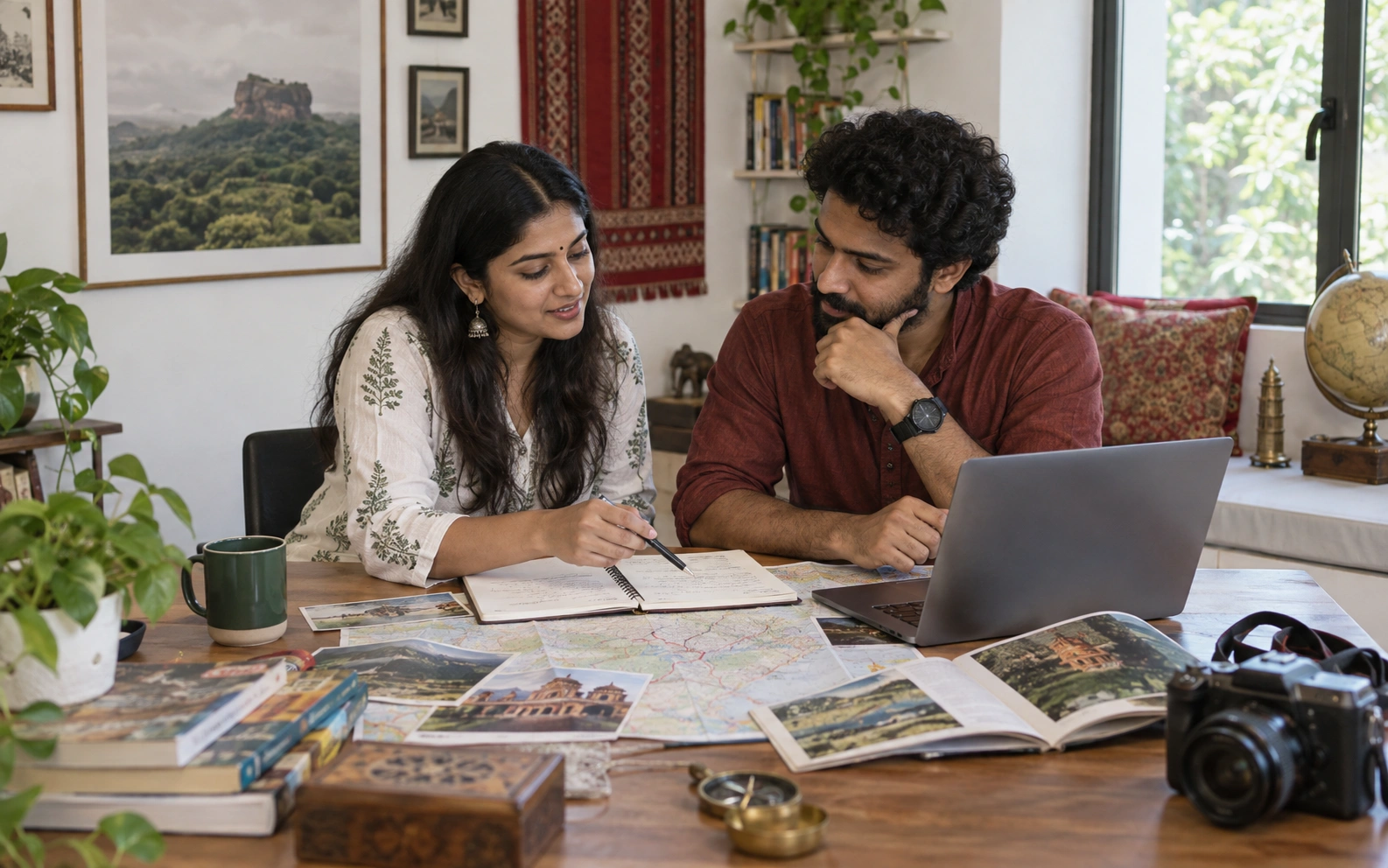
the itinerary.
Fit signal
Purpose
A spiritual journey, family holiday, celebration and quiet break
may need very different travel design.
Fit signal
Pace
Some travellers enjoy full days.
Others value space, slower mornings and fewer transitions.
Fit signal
Comfort
Walking, climate, transport, hotel expectations and meal timing can
change whether the same route feels easy or tiring.
Fit signal
Interests
Culture, food, spirituality, nature, shopping, learning and
adventure do not carry the same importance for every traveller.
Fit signal
Companions
A solo traveller, couple, family, senior group and group of friends
can need another balance of independence and shared time.
Fit signal
Concerns
Crowds, heights, long drives, unfamiliar food, stairs or uncertainty
may matter strongly for one traveller and hardly at all for another.
Fit signal
Previous experience
A first visit can need orientation.
A repeat visit can create space for deeper or less obvious choices.
Fit signal
Time
The right journey for two days may be very different from the right
journey for five days even when the destination is identical.
Too simple
You are this personality type, so visit this destination.
Human preferences are more complicated than one label.
A personality result should not become a rigid travel instruction.
More useful
Understand several traveller criteria and use them together.
Purpose, pace, comfort, people, interests, concerns and practical
limits can be considered together before a journey is recommended.
Tourism research reference:
a study of 1,035 participants examined how the Big Five personality
dimensions related to tourist attraction preferences, travel concerns
and travel motivations. The findings support the idea that individual
differences can matter in tourism recommendation systems, while they
do not validate any specific TMG personalisation method.
Read the published study
.
What this means for Travel Discovery
TMG does not need to claim that personality science can predict a
perfect destination. The stronger idea is simpler.
Different travellers have different criteria, so learning those
criteria before recommending a journey can improve relevance.
That is the purpose of
Thrill My Guide Travel Discovery.
Couple Travel Intelligence
A journey can create shared time. It cannot guarantee what a relationship becomes.
Couple travel is interesting to study because many journeys naturally
contain something relationship research already studies:
shared experiences.
Experimental research has found that couples taking part together
in novel and engaging activities can report increases in experienced
relationship quality compared with more ordinary activities.
This does not mean booking a holiday repairs a relationship.
It means shared novelty and meaningful activity are reasonable
things to consider when designing time for a couple.
Travel can provide that setting naturally through a new place,
unfamiliar activity, shared meal, ritual, walk, conversation or
simply time away from normal routines.
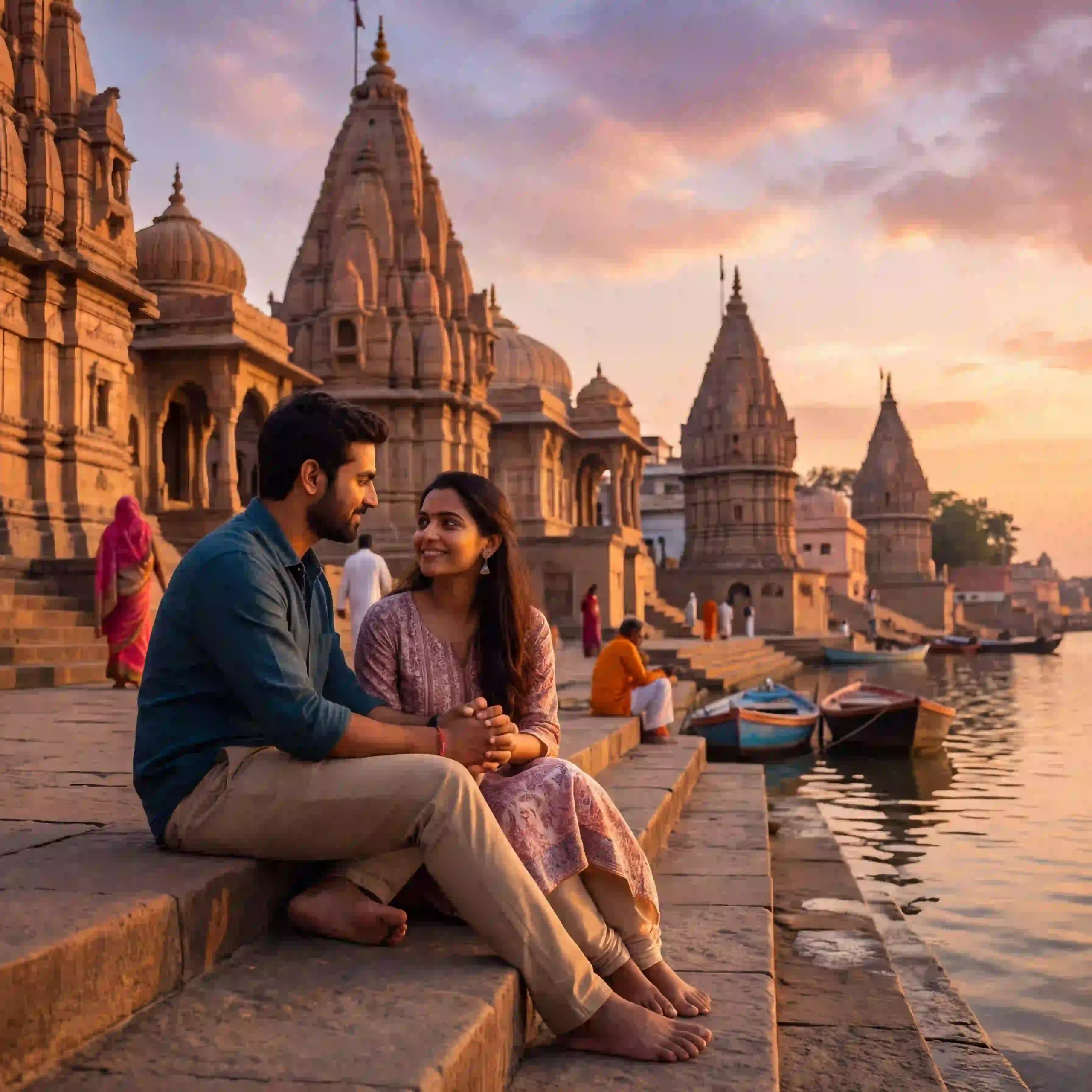
experiences. The relationship outcome remains personal.
Shared time
Protect time that actually belongs to the couple
A crowded itinerary can leave two people together physically while
giving them very little time to talk, notice or enjoy the place.
Novelty
Do something genuinely new together
Shared novelty has been studied in relationship research as one
possible way couples experience greater closeness and less boredom.
Attention
Reduce competition for the same few hours
Fewer unnecessary transfers and better pacing can leave more space
for the experience the couple actually came for.
Choice
Let both people matter
A useful couple plan should not quietly become one person’s holiday
with another person following along.
Meaning
Shared rituals can become shared memories
A meal, prayer, walk, photograph, sunrise or conversation may matter
more than adding another attraction simply to fill the itinerary.
Limits
Travel is not relationship treatment
Serious relationship difficulty may require professional support.
A journey should never be sold as a guaranteed repair.
Relationship research reference:
experiments published in the
Journal of Personality and Social Psychology
found that couples who participated together in novel and arousing
activities showed greater short term increases in experienced
relationship quality than couples completing more ordinary tasks.
Important limit:
this research studies shared activities and relationship experience.
It does not prove that a holiday, pilgrimage or TMG journey will repair
conflict, prevent separation or produce a particular relationship
result.
Family Travel Intelligence
Family travel becomes more useful when the family is designed into the journey.
A family is not simply a larger booking.
Different ages, energy levels, food habits, sleep patterns,
interests, mobility needs and expectations can be travelling
together at the same time.
Research on family functioning repeatedly identifies communication,
cohesion and support as important parts of family life.
Family leisure research also suggests that the quality of shared
leisure can matter more than simply increasing the number of hours
spent together.
Travel can create a useful shared setting, but only when the journey
leaves enough space for the family to actually experience it together.

not only the places on the route.
01
Understand the group
Children, parents, grandparents and adults may have completely
different travel limits.
02
Protect shared moments
Leave enough time for meals, conversation, rituals and experiences
the family can genuinely do together.
03
Reduce avoidable stress
Good transport, realistic walking, sensible check in and rest can
matter more than another rushed stop.
04
Keep room for difference
Not every family member needs to enjoy every activity equally.
A strong plan can allow some flexibility.
Family research
Communication matters
Research on family functioning commonly treats communication as one
of the central ways family members coordinate, express needs and
work through problems.
Travel will not create good communication automatically, but a plan
can avoid filling every available hour so completely that meaningful
conversation becomes difficult.
Family research
Cohesion is not the same as constant togetherness
Family cohesion concerns emotional connection.
It does not require every person to want the same food, activity,
pace or amount of personal space.
Good family travel can therefore combine shared experiences with
sensible flexibility.
Leisure research
Quality can matter more than quantity
Research on family leisure has found that satisfaction with shared
leisure and communication can be more informative than simply
counting how many hours the family spends in activities.
The practical lesson is useful for travel.
More sightseeing is not always more family value.
TMG design principle
Family pace is part of the product
When seniors, children or travellers with mobility needs are part of
the group, walking, transport and rest are not small operational
details. They can decide how the whole journey feels.
Family research reference:
a systematic review of research on children’s and adolescents’
happiness found family cohesion and communication among the important
family dimensions associated with wellbeing.
Read the systematic review
.
What this does not prove:
it does not prove that taking a family holiday creates family cohesion
or solves family conflict. Travel can create shared time and shared
situations. The quality of the relationships and what people do with
that time remain much bigger than the itinerary.
The TMG family travel principle
Do not maximise the number of places.
Design the journey so the people can actually experience the places
together.
Group Travel Fit
A group does not become one traveller just because one booking is made.
Travel planning becomes harder when several people bring different
interests, comfort levels and expectations into the same journey.
Tourism recommendation research has specifically studied this problem.
Group recommendation systems try to account for different preferences
instead of treating one person’s choice as the preference of everybody.
Different energy
One traveller may happily begin at sunrise while another needs
slower mornings. The schedule should recognise that difference.
Different interests
Spiritual travel, food, photography, shopping and history may matter
differently to each person.
Different comfort
Long drives, crowds, stairs, heat and hotel standards can affect
members of the same group very differently.
Different priorities
One person may consider a temple essential while another values
family time around the same visit.
Research on personality aware tourism recommendation systems has explored
how traveller preferences and concerns can be used when building group
recommendations.
View the research.
Personalisation Without Overclaiming
Better fit is a reasonable goal. A guaranteed life result is not.
Personalisation becomes more credible when its limits are clear.
We can ask better questions
Traveller information can help clarify purpose, pace, preferences,
comfort and group needs.
We can improve practical fit
Duration, route, hotel area, walking, rest and experience mix can
be adjusted around known traveller criteria.
We cannot predict a human life
Travel personalisation cannot guarantee happiness, healing, clarity,
relationship change, spiritual change or financial outcomes.
This distinction is part of
Thrill My Guide Travel Standards.
The traveller can be the centre of the journey without turning
personalisation into a miracle claim.
Pilgrimage Intelligence
A pilgrimage is more than movement between sacred places.
For many travellers, pilgrimage combines movement, belief,
ritual, community, effort, memory and personal meaning.
Modern research gives us reasons to take those experiences
seriously without turning faith into a medical claim.
A longitudinal study of a major Hindu pilgrimage in North India
found that people who participated reported an increase in
self assessed wellbeing relative to people who did not attend.
The study is important because it followed participants over time
and included a comparison group.
At the same time, pilgrimage can include heat, crowds,
long walking, sleep disruption and other physical demands.
A spiritually meaningful journey can therefore be both valuable
and tiring.
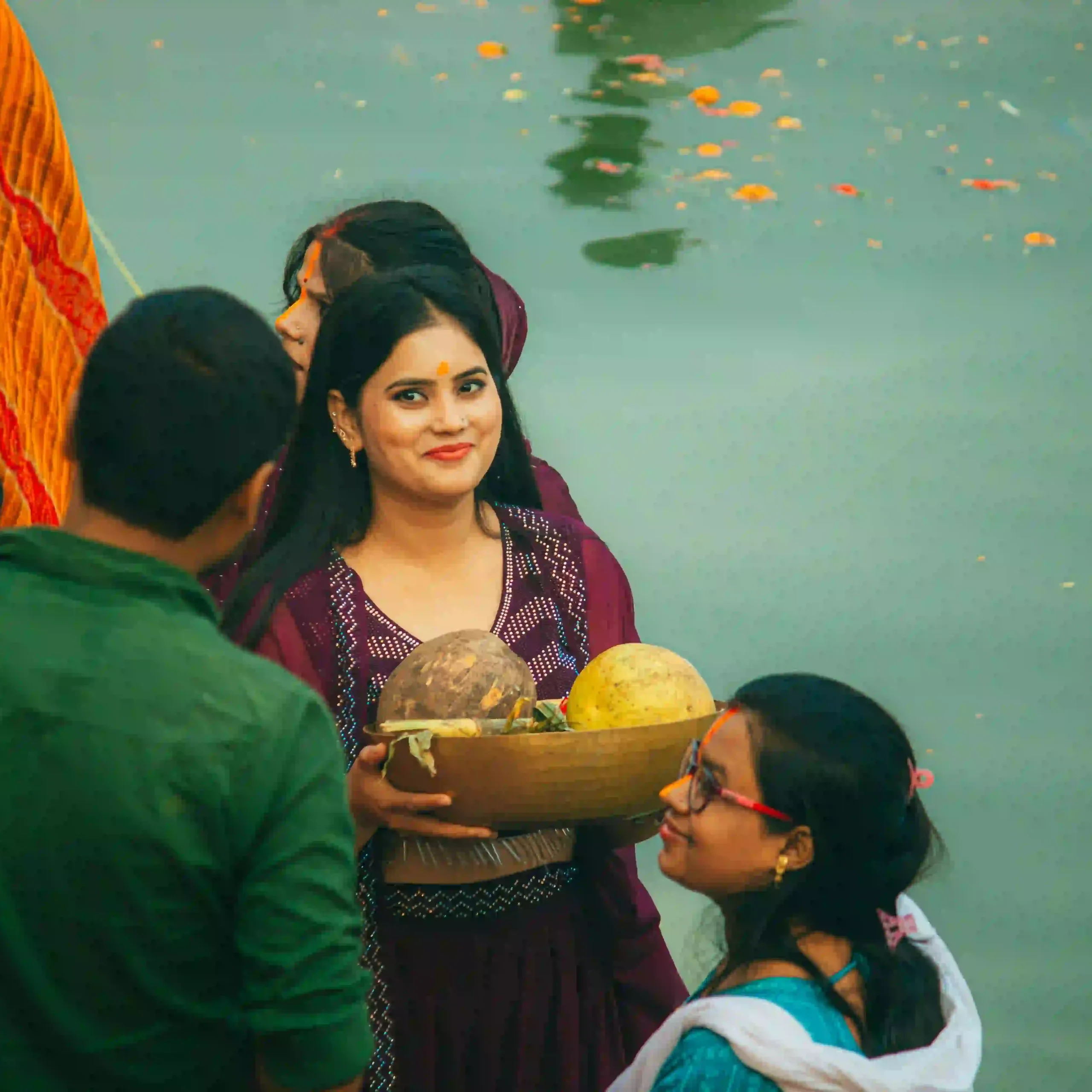
The spiritual meaning belongs to the traveller and tradition.
Meaning
The reason for going matters
A pilgrimage may be undertaken for devotion, gratitude,
remembrance, reflection, family tradition or another deeply
personal reason.
Ritual
Repeated actions can carry cultural meaning
Darshan, japa, offering, bathing, walking, fasting or seva may
have religious significance within the tradition being followed.
Community
Pilgrims often experience the journey with others
Shared identity and participation can become part of what makes
a pilgrimage different from ordinary sightseeing.
Effort
The journey itself may be part of the practice
Walking, waiting and following a traditional sequence can be
meaningful to some pilgrims rather than simply inconvenient.
Reflection
A sacred setting may invite another kind of attention
Silence, prayer and a slower moment can give a traveller space
to notice thoughts that normal routine keeps busy.
Limits
Spiritual meaning is not a guaranteed health outcome
Pilgrimage should not be sold as a cure for depression,
anxiety, disease or another medical condition.
Research reference:
a longitudinal controlled study of a month long Hindu pilgrimage
in North India found an increase in self assessed wellbeing among
participants relative to non participants.
Read the PubMed record
.
Important context:
pilgrimage research also discusses crowding, physical demand,
health risks and stress. Meaning and difficulty can exist in the
same journey.
Meditation And Mindfulness
A quiet place can support practice. The place does not perform the practice for us.
Meditation is one area where traditional Indian knowledge and modern
research can sit beside each other without being mixed together.
Modern mindfulness research studies specific practices and programs.
Traditional texts may explain meditation through another philosophical
or spiritual framework. Both can be read, but one should not be used
as a substitute for the other.
Modern research
Attention and awareness
Modern meditation research includes practices that focus attention
on breathing, sound, a mantra, bodily sensation or present moment
awareness.
Traditional context
Discipline and inner attention
Indian philosophical traditions often place meditation within a
larger discipline involving conduct, attention, restraint and
spiritual purpose.
Travel design
Protect the environment
A quiet morning, suitable place, comfortable posture and enough time
may make reflection easier than trying to meditate between rushed
transfers.
Responsible limit
Meditation is not automatically harmless for everybody
Research reports possible adverse experiences for some people.
Strong emotional or mental health concerns deserve appropriate
professional support.
Health research reference:
the United States National Center for Complementary and Integrative
Health summarises research on meditation and mindfulness, including
possible benefits, mixed evidence in some areas and reported adverse
experiences.
Read the NCCIH evidence summary
.
Traditional textual reference:
Bhagavad Gita Chapter 6 discusses meditation practice.
Verse 6.10 describes a practitioner sitting in a quiet place,
with mind and body disciplined and attention directed inward.
IIT Kanpur’s Gita Supersite provides the Sanskrit text and several
named translations and commentaries.
Read Bhagavad Gita 6.10
.
What TMG can responsibly say
A journey can protect time and environment for meditation,
quiet reflection or mindful attention when a traveller wants it.
What TMG should not promise
A particular meditation stop cannot guarantee healing,
cure a mental health condition or produce spiritual awakening.
Yoga Intelligence
Yoga is larger than a photograph of somebody doing a posture.
Classical yoga is an Indian philosophical and practical tradition.
Modern health research often studies selected forms of posture,
breathing and meditation. Travel Intelligence keeps those two
contexts clear.
Patanjali’s eight limbs
Yoga Sutra 2.29 names eight limbs:
yama, niyama, asana, pranayama, pratyahara, dharana,
dhyana and samadhi.
This presents yoga as a broader discipline than physical posture.
Research usually studies specific yoga programs
Modern studies differ in style, frequency, duration,
teacher, posture, breathing and participant group.
Their findings therefore should not be treated as proof for
every form of yoga.
A journey can create time for safe practice
Gentle movement, breathing or a guided yoga session may fit
some journeys when the traveller wants it and the activity is
suitable for their health and mobility.
Not every posture is suitable for every traveller
Older adults, pregnant travellers and people with some health
conditions may need modifications or professional guidance.
Research and safety reference:
NCCIH describes yoga as an ancient practice rooted in Indian
philosophy and summarises evidence for areas such as stress,
sleep, balance and general wellbeing. It also explains limitations
and safety considerations.
Read the NCCIH yoga evidence summary
.
Classical text reference:
IIT Kanpur’s heritage text project also provides the
Yoga Sutra
with traditional textual material and commentary views.
Important distinction:
evidence that a modern yoga program may support wellbeing does not
prove every traditional claim, and traditional authority does not
automatically establish a modern clinical effect.
Ancient Indian Knowledge
Old knowledge deserves respect. It also deserves accurate labels.
Thrill My Guide can study Indian knowledge systems deeply without
pretending that scripture, philosophy and modern science are the
same type of evidence.
Depending on the subject, Travel Intelligence may examine the
Rigveda, Yajurveda, Samaveda, Atharvaveda, Upanishads,
Bhagavad Gita, Yoga Sutra, Puranic literature, Ayurveda,
pilgrimage traditions and other surviving texts.
But a large traditional library should not become a licence to attach
an ancient verse to any modern marketing claim.
The text must genuinely discuss the idea being presented.
Textual
What does the text actually say?
Give the work, section, chapter or verse when it can be verified.
Traditional
How is it understood within the tradition?
Keep commentary and devotional interpretation separate from the
base text where possible.
Scientific
Has the modern claim actually been studied?
A traditional practice needs separate scientific evidence if a
modern health claim is being made.
Travel Intelligence rule
Scripture can support a statement about scripture,
philosophy, belief, ritual or tradition.
It cannot by itself prove a modern medical, psychological,
financial or scientific outcome.
Appropriate
Bhagavad Gita Chapter 6 contains teachings associated with
meditation, self discipline and inward attention.
Not appropriate without separate evidence
Reading or following a verse will clinically cure anxiety,
depression or another health condition.
Why this matters for Thrill My Guide
India has one of the world’s richest traditions of pilgrimage,
philosophy, yoga, ritual and sacred geography.
TMG can make that knowledge easier for travellers to understand
while keeping the difference between history, devotion,
philosophy, personal experience and scientific research clear.
Ujjain Evidence Example
How Travel Intelligence handles a sacred place without flattening it into a marketing claim.
Pattaneshwar Mahadev is a useful example because its importance is not
something TMG needs to invent.
It already exists within Ujjain’s traditional sacred literature.
Traditional textual evidence
Pattaneshwar Mahadev and the thirty second place in the 84 Mahadev tradition
The Skanda Purana’s Avantya Khanda contains the
Caturasiti Linga Mahatmya, the traditional account of the
eighty four Shiva lingas associated with Ujjain.
Chapter 32 is devoted to Pattaneshwara.
Its opening identifies Pattaneshwara as the thirty second deity
in this sequence.
The traditional narrative in this chapter is framed as a dialogue
involving Shiva and Parvati and speaks about Mahakalavana,
the sacred landscape connected with ancient Ujjain.
Narada also appears within the wider traditional telling of the
place and its praise.
This gives Pattaneshwar a clear traditional and textual context.
What it does not give us is permission to convert every devotional
statement in the Purana into a scientific or medical promise.
Primary traditional reference:
the
Skanda Purana, Avantya Khanda, Caturasiti Linga Mahatmya,
Chapter 32
presents Pattaneshwara as the thirty second deity and preserves
the traditional narrative connected with the shrine.
Text
We can state the traditional source
The chapter and textual context can be named instead of saying
vaguely that an ancient scripture says something.
Meaning
We can explain why a traveller may value the place
A person who follows this tradition may experience the site as
part of Ujjain’s sacred geography and 84 Mahadev heritage.
Choice
The experience should remain optional
Not every traveller wants the same spiritual depth.
A meaningful stop should fit the traveller’s beliefs,
time and purpose.
Reflection
Quiet time can be designed around the place
TMG may protect a few unhurried minutes for prayer,
journaling, silence or reflection when that is relevant
to the traveller.
Evidence
Tradition is identified as tradition
The importance of the shrine in the Skanda Purana is a textual
and religious fact. Its supernatural claims remain matters of faith.
Limit
No guaranteed personal result
Visiting the shrine should not be advertised as guaranteed
healing, business success, relationship change or another
measurable life result.
Destination context:
the District Ujjain administration provides an official public
reference for
Shri Mahakaleshwar Temple
.
Official temple rules and current local instructions should always
control practical matters such as access, reporting and availability.
How this can appear inside a TMG journey
In a suitable
Thrill My Guide Ujjain journey
,
a traditional place can be included because its story,
setting and meaning fit the traveller.
The purpose is not to make the itinerary look more mystical.
It is to help a traveller understand why a place may deserve
unhurried attention.
Meaning Needs Practical Design
A sacred journey can lose its meaning when the body is simply trying to survive the schedule.
Spiritual importance does not remove physical reality.
Good pilgrimage planning should respect both.
Walking
Understand the real distance, stairs and standing involved before
deciding how many sacred places to include.
Heat and crowds
Festival days and important darshan periods may change the
physical demand of the same route.
Rest
Senior travellers, children and tired adults may need real rest
rather than a five minute pause between stops.
Food and water
Meal timing and hydration can affect how comfortable a long
pilgrimage day feels.
Official rules
Temple and government instructions should take priority over
an old itinerary or an unofficial online claim.
Personal limits
Faith does not require ignoring a genuine health,
mobility or safety concern.
The TMG principle is simple.
Protect the purpose of the pilgrimage by planning the practical
journey around the real people who are travelling.
Optional Vedic Astrology
Astrology may be meaningful to a traveller. That does not make it scientific proof.
Some travellers understand important life events, pilgrimage and timing
through Vedic astrology. Thrill My Guide can respect that tradition
without presenting astrological interpretation as established science.
When a traveller actively chooses this layer, a suitable practitioner
may discuss traditional themes connected with a kundli, grahas,
rashis, houses, timing or spiritual practices.
The interpretation remains optional and belief based.
This means the language must stay different from a factual promise.
An astrologer may explain how a tradition interprets a house or a
planetary theme. TMG should not state that travelling to one place
will automatically activate a house, improve a marriage, increase
money, create business success or change somebody’s destiny.
Traditional theme
Travel and pilgrimage
A practitioner may discuss traditional astrological themes associated
with long journeys, pilgrimage, teachers, philosophy or dharma.
Traditional theme
Relationships
A practitioner may discuss traditional relationship themes in a
chart when the traveller asks for that interpretation.
No relationship outcome is guaranteed.
Traditional theme
Work and responsibility
Astrological traditions contain interpretations connected with
work, duty and public life. These remain interpretations,
not evidence of future financial results.
Traditional theme
Inner life
Meditation, solitude and spiritual practice may also be discussed
through an astrological tradition when a traveller chooses it.
Traveller choice
Astrology is never compulsory
A traveller does not need to believe in astrology to use
Travel Discovery, book a journey or benefit from practical
travel planning.
Clear limit
No guaranteed outcome
An astrology informed journey cannot guarantee health,
wealth, marriage, business, luck or spiritual transformation.
How TMG can describe this responsibly
Travellers who follow Vedic astrology may optionally request an
astrology informed interpretation of their journey.
A practitioner may discuss traditional themes associated with
destinations, rituals or the traveller’s chart.
This remains a belief based spiritual layer and does not guarantee
a financial, relationship, health or life outcome.
Scientific evidence boundary:
a well known double blind study published in
Nature
tested whether natal charts could accurately describe personality
traits under the study conditions and did not support the tested
astrological claims.
That experiment does not represent every Vedic tradition,
but it is one reason TMG does not present astrology as established
scientific evidence.
Respect does not require pretending certainty.
A person can value astrology as faith, tradition or personal
interpretation while TMG remains honest about the type of evidence
being used.
NLP And Communication
Good language can make a question easier to understand. It should not be used to manufacture a health claim.
Thrill My Guide may use selected communication ideas associated with
NLP when they help a traveller think more clearly about preferences,
values and travel criteria.
That is very different from claiming NLP has been proven to cure
anxiety, depression, trauma or another medical or psychological
condition.
A systematic review of experimental NLP research found little evidence
that NLP interventions improve health related outcomes.
The available studies were limited in number and quality.
That evidence does not support clinical promises.
Useful communication applications
- Clear criteria questions
- Values based travel questions
- Future oriented reflection
- Sensory and descriptive language
- Simple cause and effect explanation
- Clarifying what a traveller means
- Helping somebody compare priorities
- Making complicated information easier to read
Claims Travel Intelligence rejects
- NLP cures depression
- NLP cures anxiety disorders
- NLP removes trauma
- NLP guarantees confidence
- NLP controls another person’s mind
- NLP guarantees a relationship result
- NLP automatically transforms the subconscious
- NLP replaces qualified mental health care
Systematic review:
researchers reviewing experimental NLP studies concluded that
there was little evidence for improved health related outcomes
and that the evidence base was limited and generally weak.
The review is available through the
United States National Library of Medicine
.
Appropriate TMG use
“When you return from this journey, what would make you feel that
the time was genuinely worth it?”
This is a useful reflective question.
Not appropriate
“This language technique will automatically change your subconscious
and cure the problem.”
Travel Intelligence does not support that claim.
The writing principle
Words such as discover, notice, naturally, clearly and begin can make
writing easier to imagine when they genuinely describe the experience.
They should not be used to hide a condition, manufacture urgency or
imply that an outcome has already happened.
Travel Pace And Fatigue
More places can make an itinerary look richer while making the actual journey poorer.
Travel uses energy.
Flights, road movement, early starts, queues, walking, heat,
unfamiliar beds and time changes can all affect how a person feels.
This sounds obvious, but package design often treats every open hour
as space for another activity.
Travel Intelligence treats pace as part of the journey itself.
01
Sleep matters
Reduced sleep can affect alertness, mood and how much energy a
traveller has for the next day.
02
Transfers consume more than clock time
Packing, checking out, waiting, driving and checking in can make a
short transfer feel like a much larger part of the day.
03
Walking changes by traveller
The same temple, fort or market may feel easy to one person and
demanding to another.
04
Crowds add load
Waiting, noise, heat and navigating a large crowd can make an
otherwise short activity more tiring.
05
Time zones can affect the body clock
International travel across time zones can temporarily disrupt
sleep and daytime alertness.
06
Rest can protect the important experience
A pause before an important darshan, dinner, family moment or
activity may create more value than another rushed stop.
Travel health reference:
the
CDC Yellow Book 2026 guidance on jet lag
explains how rapid travel across time zones can disturb sleep,
alertness and daytime function.
It also notes that sleep loss during travel can make jet lag
symptoms worse.
Important distinction:
ordinary travel tiredness and medically defined jet lag are not the
same thing.
TMG uses these findings to support practical thinking about rest and
itinerary pace, not to diagnose a sleep disorder.
Itinerary thinking
How many places can fit?
This question maximises the schedule.
Traveller thinking
How much can these people enjoy well?
This question protects the journey.
Creator Journey Evidence
One person’s journey can teach us something without proving what will happen to the next person.
Creator Journeys bring a kind of knowledge that academic research
cannot replace: first hand experience of a specific journey.
A real traveller can explain where time was lost, which sequence
worked, what felt rushed, where the group rested, what they would do
differently and which moment mattered more than expected.
That is useful evidence of the journey they actually lived.
It is not proof that every future traveller will have the same
emotional or personal result.
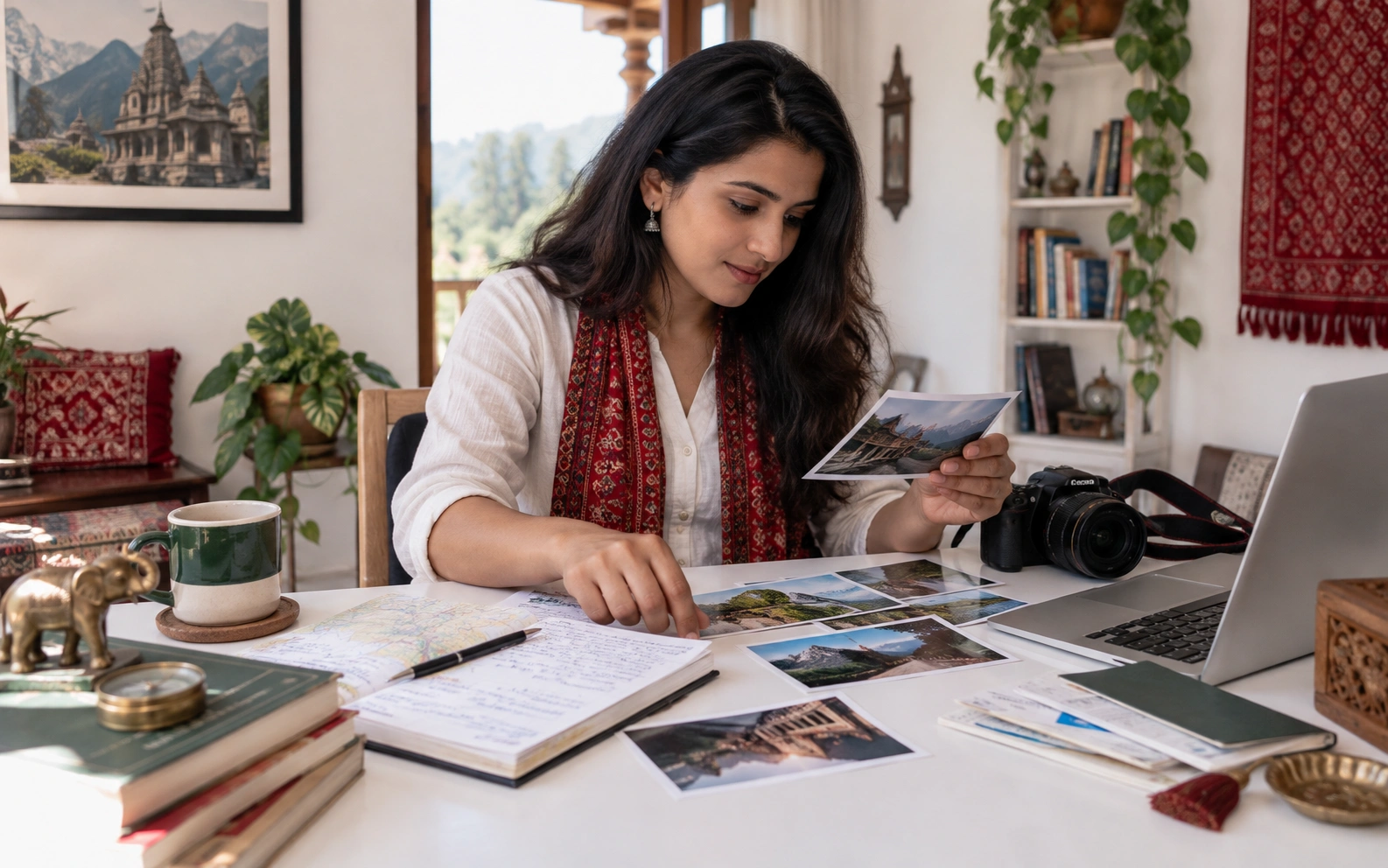
behind the creator’s own account.
Identity
The creator’s identity should be known to TMG.
Journey completion
A personally completed journey should have evidence appropriate
to that claim.
Image permission
Permission should exist to publish relevant creator photographs.
Story confirmation
Statements attributed to the creator should be confirmed by
that creator.
Journey evidence
Available records should reasonably support the route and
experience being described.
Operational review
The journey offered to future travellers should be reviewed as
an actual travel product.
Review date
Verification should not quietly become permanent when the product
or information has changed.
Outcome separation
The creator’s experience must remain separate from a promise about
the next traveller.
The stronger Creator Journey position
Start with a journey someone has genuinely lived.
Then decide whether its theme, pace and experience fit you.
Why Creator Journeys can still be powerful
Their value comes from human context, practical sequence,
mistakes already learned, local observations and a real point of view.
They do not need an exaggerated transformation claim to be useful.
Evidence Into Language
A source is useful only when the sentence matches what that source can actually support.
This is how Travel Intelligence turns research into safer,
clearer public language.
| Evidence type | Good public wording | Wording to avoid |
|---|---|---|
|
Strong scientific evidence |
Research consistently finds or strong evidence suggests, when that accurately describes the literature. | Guaranteed for every person. |
|
Individual peer reviewed study | A study found or researchers observed. | Science has proved forever. |
|
Early or mixed research |
Early evidence suggests, results are mixed, or more research is needed. | This definitely works. |
|
Scripture or traditional source |
The text describes, the tradition teaches, or devotees traditionally understand. | Scientists have proved this because scripture says it. |
|
Expert framework | This framework may help organise or interpret the experience. | This professional framework guarantees the outcome. |
|
Creator experience | This traveller experienced or this creator found. | You will experience the same result. |
|
Astrology or belief | In this tradition, a practitioner may interpret. | Your chart proves this event will happen. |
The Boundary That Protects Trust
Science can be respected without dismissing tradition. Tradition can be respected without pretending it is science.
Personal experience can be valuable without becoming a universal rule.
Belief can carry deep meaning without becoming a guaranteed outcome.
Science
Ask what has been tested, how strong the evidence is and what
limitations remain.
Tradition
Explain the source, historical context and traditional meaning
as accurately as possible.
Experience
Let a real traveller describe what happened to them without
promising that it will happen to everybody.
Belief
Respect a traveller’s chosen spiritual framework while making
clear that it remains a matter of belief or interpretation.
Travel Intelligence becomes stronger when it is allowed to say
“we do not know”, “the evidence is limited” or “this belongs to
tradition” whenever that is the most accurate answer.
Travel Wellness
Travel can create an environment for wellbeing. It should not be sold as medicine.
Travel Wellness at Thrill My Guide is about how a journey is lived,
not about diagnosing or treating a health condition.
Rest, movement, food, nature, reflection, sleep, spiritual practice,
conversation and personal space can all affect how a journey feels.
TMG can design around these factors when they matter to the traveller.
The important boundary is equally clear.
Travel Wellness is not clinical care.
A person dealing with a medical or mental health condition should not be
told that a trip can replace qualified treatment.
Rest
Protect recovery time
Enough sleep and realistic pacing may matter more than another
attraction added late in the day.
Movement
Keep the body moving appropriately
Walking, gentle yoga or another suitable activity may help some
travellers feel more comfortable during a journey.
Food
Make meals part of good travel design
Timing, hydration, food safety, personal preference and cultural
context all matter.
Nature
Leave room for quieter environments
A garden, river, forest, beach or other natural setting can create
another quality of attention.
Reflection
Give the experience time to settle
A few thoughtful minutes can sometimes be more useful than
immediately moving to the next stop.
Connection
Protect shared time
Conversation, shared meals and meaningful experiences can be given
real space in a couple or family journey.
Spirituality
Respect the traveller’s chosen practice
Prayer, meditation, darshan, ritual or silence can be included when
they genuinely matter to the traveller.
Choice
Wellness should never become pressure
A traveller should be free to choose which practices fit them and
which do not.
The Travel Wellness boundary
TMG can create conditions for rest, reflection, movement,
connection and meaningful experience.
It cannot guarantee that those conditions will produce a particular
medical, psychological or spiritual result.
The deeper wellbeing system will later live within the
Travel Wellness
resource.
Food Intelligence
What we eat matters. That does not mean every meal has a fixed emotional effect.
Food can influence physical comfort, nutrition, energy intake,
culture and the rhythm of a travel day.
This gives TMG many useful things to design around:
safe food, adequate meals, hydration, dietary preference,
religious preference, local culture and the timing of food around
long journeys or important activities.
What TMG should not do is claim that one food automatically creates
one emotion, changes a person’s vibration or guarantees a particular
mental state.
time.
Adequacy
Travellers need enough suitable food and nutrients for their
circumstances rather than a fashionable food rule that leaves them
uncomfortable.
Balance
Different foods contribute different nutrients and energy.
A varied meal pattern is generally more useful than treating one
ingredient as magical.
Moderation
A holiday can still include pleasure and local food without turning
every meal into excess.
Diversity
Local vegetables, grains, pulses, fruits and other culturally
appropriate foods can add both nutrition and destination context.
Food safety
A meal is not healthy simply because it is traditional.
Clean preparation and safe storage remain important.
Traveller preference
Vegetarian food, Jain food, food without onion and garlic,
allergies and other requirements should be understood before
the meal is arranged.
Nutrition reference:
the
World Health Organization healthy diet guidance
identifies adequacy, balance, moderation and diversity as core
principles of a healthy diet.
The TMG food rule
Use food to support the journey practically and culturally.
Do not turn food into an unsupported promise about somebody’s
emotions, hormones, spirituality or future health.
Where this becomes practical
The future
TMG Food Guides
can help travellers understand what to eat, where local food matters,
what fits a pilgrimage day, what food safety issues deserve attention
and how meal timing fits the journey.
Ayurveda
Ayurveda can be respected as a traditional Indian system without turning every traditional claim into modern medical fact.
Ayurveda is one of India’s long standing traditional medical systems.
It includes ideas about diet, lifestyle, exercise, herbs and individual
constitution.
That makes Ayurveda relevant to Indian cultural and wellness research.
It also means TMG has to be especially careful when a traditional idea
crosses into a health claim.
Traditional knowledge
Cultural context can be explained
Travel Intelligence may explain traditional Ayurvedic concepts,
food customs and historical understanding when they are labelled
accurately as traditional knowledge.
Scientific evidence
Individual medical claims need separate evidence
A claim that an Ayurvedic treatment improves a disease or condition
requires suitable clinical evidence.
Tradition alone cannot establish that result.
Food
Cultural food ideas can remain optional
A traveller may choose a simple meal pattern or food tradition
because it feels appropriate to their journey.
TMG does not need to turn that preference into a cure claim.
Safety
Natural does not automatically mean safe
Herbal and mineral preparations may interact with medicines or
contain substances that require professional caution.
Evidence and safety reference:
the United States
National Center for Complementary and Integrative Health
describes Ayurveda as an ancient Indian medical system while noting
that only a limited number of well designed clinical trials support
many of its health uses.
It also warns that some preparations may contain lead, mercury or
arsenic at harmful levels.
TMG safety boundary:
Travel Intelligence can discuss Ayurveda as traditional knowledge.
Thrill My Guide should not prescribe Ayurvedic medicine,
recommend stopping conventional care or provide unqualified medical
treatment.
Nature And Environment
Sometimes the environment itself changes the pace of attention.
Natural settings can offer quieter sensory conditions, movement,
open space and a different rhythm from many everyday urban routines.
Research on green space and structured nature exposure suggests
associations and potential benefits for aspects of mental wellbeing.
The evidence varies by population, activity and study design.
01
Green space
Gardens, parks and forest settings may offer opportunities for
walking, quiet attention and a change from indoor routines.
02
Blue space
Rivers, lakes and coastal environments can become part of a slower
travel experience when they fit the destination.
03
Outdoor activity
Walking, gardening and other outdoor activities combine environment
with movement, which makes it difficult to attribute every effect
to nature alone.
04
Attention
A quieter setting may help some travellers give more attention to
reflection, conversation or simply what is around them.
05
Access
Nature should not automatically mean difficult hiking.
A garden, riverside or accessible park can still offer outdoor time.
06
Limits
Nature travel should not be advertised as a guaranteed treatment
for anxiety, depression or another medical condition.
Research reference:
a systematic review and meta analysis of nature based outdoor
activities found positive effects for several mental wellbeing
outcomes across included studies, while study quality and intervention
design varied.
Read the systematic review
.
What this means for travel:
TMG can reasonably protect time in nature when it fits the traveller.
It should not call a forest, river or beach a clinical treatment.
Reflection And Journaling
Writing something down can help a traveller notice it. That is enough reason to use a journal without calling it therapy.
TMG can use simple reflection questions before, during or after a
journey to help travellers notice what mattered to them.
A journal can capture a thought, memory, gratitude, decision or
question that might otherwise disappear when normal routine returns.
But research on expressive writing does not justify strong claims
that journaling automatically improves psychological or physical
health.
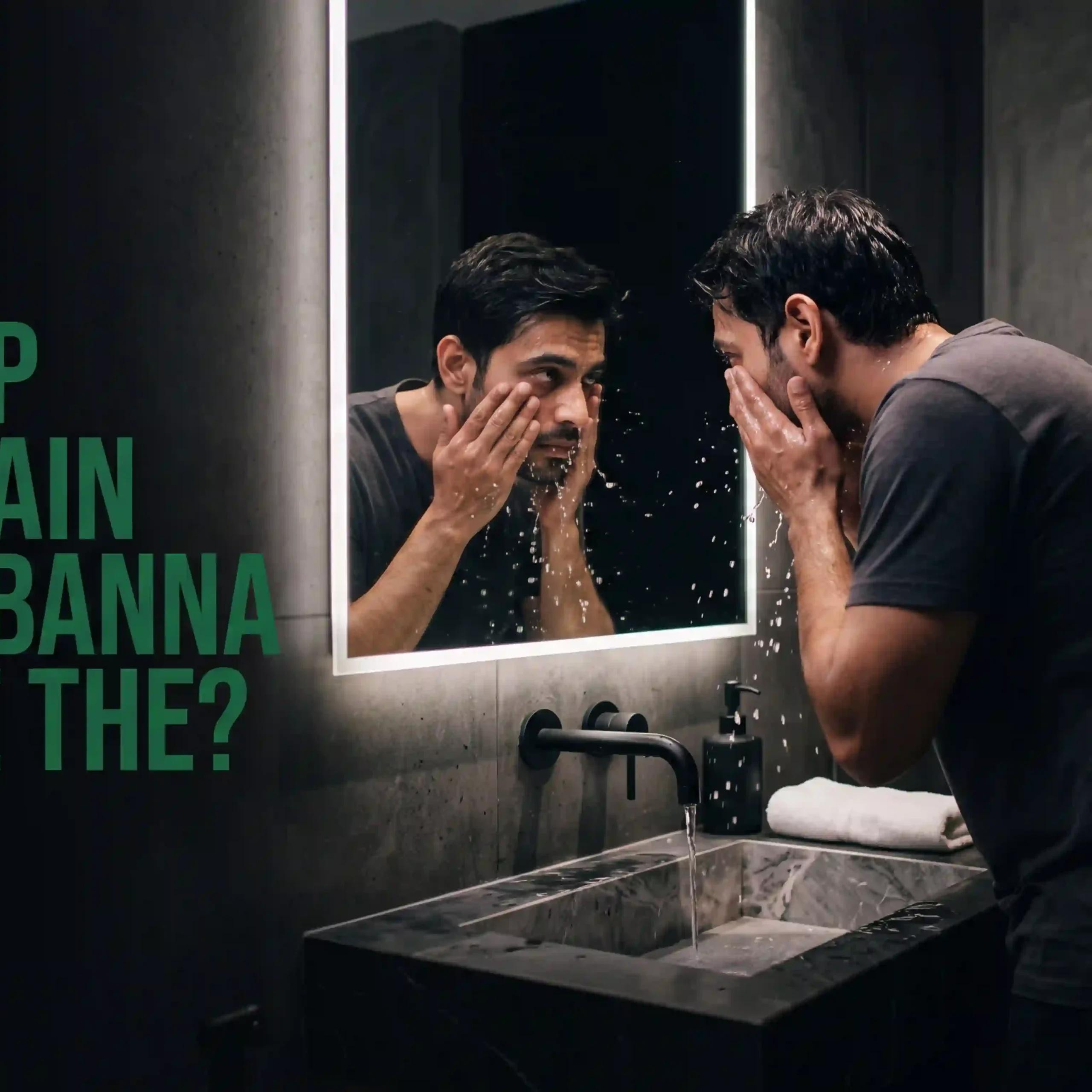
A quiet question can help a traveller notice what the journey meant.
Before the journey
Ask what you want enough space for, what you want less of and what
would make the journey feel worth the time.
During the journey
Notice the moments that change your attention rather than recording
every activity simply because it happened.
After the journey
Record what you want to remember, continue, change or share when you
return to normal life.
Personal choice
Not everybody likes journaling.
Conversation, quiet thought, photography or prayer may be more
natural for another traveller.
Simple TMG reflection questions
- What did I notice here that I normally miss?
- Which part of today felt most worth protecting?
- What did I learn about the person travelling with me?
- What would I like to carry home from this journey?
Evidence limit:
a meta analysis of randomized trials examining expressive writing
found little or no overall effect on psychological or physical health.
This is one reason TMG treats journaling as a reflection tool rather
than a treatment.
Read the meta analysis
.
Seva And Prosocial Action
Helping somebody can add meaning to a journey. It should never become a transaction with fate.
Seva has a deep place in Indian spiritual and community traditions.
Modern research also studies volunteering and prosocial behaviour from
a different perspective.
These two traditions of thought can sit beside each other.
A traveller may serve because of faith, gratitude, compassion or simple
human responsibility.
Research may separately ask whether helping behaviour is associated with
wellbeing.
Intention
Help should genuinely help
Seva should respond to a real need rather than exist only to make a
traveller feel spiritual.
Dignity
The person receiving help is not content
Photography or social posting should never override privacy,
dignity or consent.
Choice
Service should not be forced
A traveller may choose a suitable form of seva when it fits their
values, destination and journey.
Evidence
Prosocial behaviour is studied separately
Research has found associations between volunteering, helping and
several wellbeing outcomes, but causality and study quality vary.
Tradition
Seva can also carry spiritual meaning
That meaning belongs to the relevant religious or philosophical
tradition and should be described as such.
Limit
No guaranteed return
TMG should not promise that giving food, money or service will
automatically produce wealth, luck or another future benefit.
Research reference:
an umbrella review of 28 reviews found potential social, mental,
physical and general wellbeing benefits associated with volunteering,
while also noting that the overall quality of the review evidence was
generally poor.
Read the umbrella review
.
The TMG seva principle
Help because the help itself has value.
Do not turn somebody else’s need into a promise about what the
traveller will receive in return.
Mind Body And Meaning
A journey can be designed around the whole travel experience without claiming to redesign a human being.
This is the responsible version of the mind, body and soul idea behind
many meaningful journeys.
Mind
Attention, learning, reflection, conversation, novelty and time away
from normal routine can shape what a traveller notices and remembers.
Body
Sleep, movement, walking, food, hydration, temperature, transfers and
rest affect the physical experience of the journey.
Meaning
Faith, family, culture, gratitude, service, personal values and
important life moments can give the same destination a completely
different meaning.
This is why the Thrill My Guide position remains
Travel That Changes You
as an aspiration and design direction, not a guaranteed outcome.
Travel creates the environment.
The person, the experience and what happens afterwards remain real
parts of the story.
Travel Discovery Methodology
Better travel recommendations begin before somebody asks, “Where should I go?”
Travel Discovery is the practical system through which
Thrill My Guide tries to understand the traveller before recommending
a journey.
The method does not diagnose personality, mental health,
relationships or spiritual condition.
It collects travel relevant criteria and organises them into a
clearer decision.
Some travellers already know their destination.
Others know only that they need rest, time with family,
a spiritual journey, celebration or a break from routine.
Discovery can begin in either place.
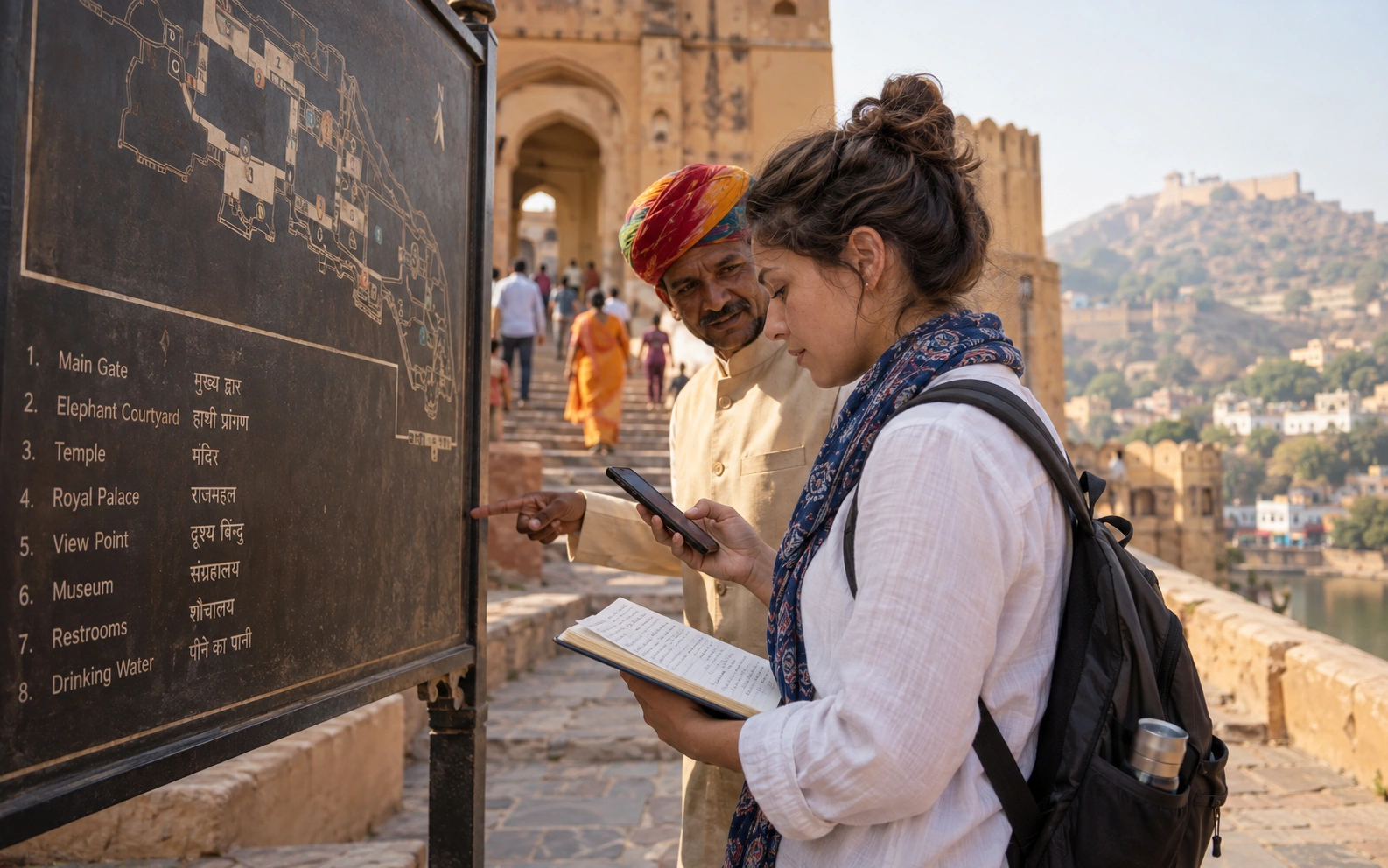
about what the destination actually requires.
01
Understand the people
Who is travelling, their ages, mobility, group type and practical
needs.
02
Understand the reason
What brought the traveller to this journey at this particular
time?
03
Understand the limits
Time, budget, arrival, departure, comfort, walking and other
real constraints.
04
Clarify priorities
Which experiences are essential, preferred, optional or
unnecessary?
05
Build traveller criteria
Turn the answers into useful planning attributes such as pace,
purpose, comfort and experience type.
06
Compare possible fits
Consider destinations, journey frameworks or personalisation
options against those criteria.
07
Verify practical reality
Check routes, timings, availability, local rules and operational
limits before presenting certainty.
08
Let the traveller choose
The system can guide the decision.
It should not remove the traveller’s own judgement.
What Travel Discovery is really trying to improve
Not prediction of a person’s future.
Better clarity about what kind of journey makes sense for the
people, purpose, time and limits that exist today.
You can see the live system at
Thrill My Guide Travel Discovery.
Human Decision Making
People rarely choose travel through one neat formula.
A travel decision can develop through conversations, memories,
budget, timing, social influence, familiar places, new ideas,
practical risk and emotion.
Tourism researchers have argued that destination decision making is
better understood as a process rather than only an equation that predicts
one final choice.
Travellers may begin with several possible destination types and narrow
them as they reject options that do not fit.
Past experience and perceived travel risk can also change what feels
attractive.
Internal
What the traveller wants
Interests, purpose, previous experience, comfort and expectations
influence which options receive attention.
Practical
What the traveller can do
Time, money, transport, health, documents and availability can
remove otherwise attractive options.
Social
What other people influence
Family, friends, social media, previous travellers and cultural
expectations may affect the decision.
Situational
What matters right now
The same traveller may choose differently in another season,
life stage or purpose.
Tourism decision research:
research in
Annals of Tourism Research
argues for understanding tourist decision making as an unfolding
process rather than only the final choice.
Destination choice research:
another study of destination choice examined how travellers move
through different destination alternatives and why particular types
are selected or rejected.
View the study
.
Choice Architecture
More options are not always bad. Unorganised options are often less useful.
It is tempting to say that too many choices always confuse people.
Research does not support such a simple rule.
A major meta analysis of choice overload found an average effect close
to zero across the studies it examined, together with substantial
variation between situations.
In some conditions large choice sets created problems.
In others they did not.
The practical lesson for TMG is not to hide choice.
It is to help travellers organise it.
Poor choice design
Fifty packages with no meaningful difference explained
The traveller has to compare everything from the beginning and
may not understand which attributes actually matter.
Better choice design
A smaller relevant set with clear differences
Explain who each option fits, the tradeoffs, price basis,
pace and major inclusions so the traveller can compare intelligently.
Choice research:
a meta analysis of 63 conditions from 50 experiments found no universal
main effect showing that more options always create choice overload.
Effects differed substantially across conditions.
Read the Journal of Consumer Research abstract
.
What TMG should do instead of manipulating choice
Reduce irrelevant options, explain differences clearly,
show tradeoffs honestly and give the traveller a way to explore
deeper when they want more detail.
Behaviour Without Manipulation
Travel decisions can be influenced by how information is presented.
That makes responsible presentation part of Travel Intelligence.
A systematic review of tourism research identified several recurring
cognitive biases in traveller decisions.
The point is not to exploit them.
The point is to recognise that design, wording and social information
can change how a traveller sees the same choice.
Heuristics
Mental shortcuts
Travellers may simplify a difficult decision using familiar brands,
price, popularity or one memorable feature.
Framing
Presentation changes perception
“Save ₹2,000” and “pay ₹8,000” can describe the same economic
situation while creating another emphasis.
Social influence
Other people’s choices matter
Reviews, friends, trends and visible popularity can affect what
travellers consider attractive.
Dissonance
People may defend a choice already made
Post booking or post trip judgement can be influenced by the desire
to feel that the original decision was correct.
Tourism behaviour reference:
a systematic review in
Tourism Management
reviewed cognitive biases across tourist decisions and identified
heuristics, social bias and stereotype, framing effects and cognitive
dissonance among the commonly studied areas.
The TMG behavioural rule
Behavioural understanding may improve clarity and user experience.
It should not justify fake scarcity, hidden conditions,
fabricated social proof or wording designed to push a traveller
past an important fact.
Destination Fit
A destination is not “right” in isolation. It is right for something.
Ujjain may be a strong fit for one purpose.
Jaisalmer may be stronger for another.
A quiet nature destination may make more sense when somebody’s main
criterion is rest rather than sightseeing.
Destination fit becomes clearer when TMG compares the characteristics
of the place with the characteristics of the traveller and the journey
they want.
| Traveller criterion | Destination question | Why it matters |
|---|---|---|
|
Purpose | What kind of experiences does this place genuinely support? |
A spiritual, celebratory, romantic and restorative journey may need different environments. |
|
Pace | How much movement is required between important experiences? |
A destination with long transfers may not fit somebody who wants a slow two day break. |
|
Comfort | What walking, weather, crowd and transport conditions are normal? | Practical reality can matter more than the destination image. |
|
People | How well does the destination work for this group? |
Children, seniors, couples and solo travellers can experience the same place differently. |
|
Season | What changes during the actual travel month? |
Heat, rain, festival crowds or winter conditions can completely change the same itinerary. |
|
Budget |
Can the traveller experience the destination comfortably within the real budget? |
A destination does not fit if the required travel style is financially unrealistic. |
This is why “best destination” is often the wrong question.
A more useful question is:
best for whom, for what purpose, in which season, with what time
and under which practical limits?
Different Journey Types
Not every product on a travel platform carries the same kind of evidence.
TMG should make that difference visible rather than placing every
experience under one vague word such as “recommended”.
TMG designed
Expert Curated Journey
A journey framework designed or reviewed by TMG using destination
knowledge, operational planning, traveller needs and suitable
personalisation.
Its credibility should come from the quality of the design,
clear inclusions, current checks and honest limitations.
First hand
Creator Journey
A journey theme connected with a real creator’s personally completed
route or experience.
First hand experience adds human context.
Verification does not promise the same outcome to another traveller.
External provider
Partner Supplied Service
A hotel, activity, transport option or other inventory may be
supplied by an external booking partner.
Partner inventory should not automatically be represented as a
TMG Expert Curated Journey.
From Research To Journey
Travel Intelligence becomes useful only when it changes a real decision.
Research should not sit on a page simply to make the website look
authoritative.
It should affect what TMG writes, recommends, includes or removes.
01
Start with a real traveller or travel question
Example: does a first time family visiting Ujjain need every
major temple in one day?
Question
02
Examine relevant evidence
Use research, official rules, local verification,
first hand experience and traditional sources according to the
question.
Evidence
03
Classify what can responsibly be claimed
Separate strong evidence, developing evidence, tradition,
experience and belief.
Claim level
04
Apply traveller criteria
Consider purpose, people, pace, comfort, time and priorities
through Travel Discovery.
Fit
05
Design the journey
Decide route, sequence, rest, activity mix and practical
experience around what matters.
Blueprint
06
Verify operational reality
Check local timing, supplier availability, official rules,
transport and other changeable information.
Verification
07
Publish with limits visible
Pricing basis, availability conditions, evidence limits and
responsibility should not disappear behind the CTA.
Transparency
08
Learn and correct
Better local information, traveller feedback or stronger evidence
should improve future content and journey design.
Update
Recommendation Guardrails
Good recommendation design should make the decision clearer, not harder to escape.
A modern travel platform can use intelligent design without using dark
patterns.
No fake urgency
Do not invent countdowns, limited dates or sold out claims.
No fabricated social proof
Do not manufacture ratings, reviews, bookings or popularity.
No hidden tradeoff
A cheaper choice should not quietly hide an important exclusion.
No diagnosis
Travel Discovery should not tell somebody they have a psychological
or medical condition.
No forced belief
Spiritual, astrological or traditional layers stay optional.
Traveller choice remains
A recommendation is allowed to be declined.
Sometimes the most trustworthy Travel Discovery result is not
“book this now”.
It is clarity about what the traveller should look for next.
The TMG Loop
Research should improve discovery. Discovery should improve design. Real journeys should improve what we know next.
That creates a learning system rather than a collection of disconnected
travel pages.
STEP 1
Travel Intelligence
STEP 2
Travel Discovery
STEP 3
Journey Design
STEP 4
Verification
STEP 5
Real Journey
STEP 6
Learning And Update
Why this matters
Travel Intelligence is not intended to prove that every TMG idea is
right.
Its job is to make TMG more accurate over time.
Positioning With Evidence Boundaries
Outcome First is a planning architecture. It is not a promise that travel controls a human result.
This distinction protects the traveller and strengthens the Thrill My Guide idea. Research can inform the conditions a journey creates. The traveller still decides what the experience means and what changes, if anything, follow from it.
Start with the human question.
Rest, connection, clarity, reflection, celebration or perspective can be used as planning criteria. They are not guaranteed outcomes.
Turn intention into practical criteria.
Purpose, people, time, pace, mobility, comfort and priorities can narrow the travel decision without pretending to diagnose a person.
Use evidence and local verification to improve design.
Research and first hand checks can influence sequence, buffers, walking, rest, meals and logistics. They do not prove a journey is universally superior.
First hand experience is useful when it stays first hand.
A creator can explain what a journey meant to them. That experience is not converted into a promise that another traveller will feel the same.
Difference is a business proposition, not scientific proof.
TMG can explain how its discovery and journey architecture differ from destination first travel selling. Travel Intelligence should not pretend science proves a marketing category.
Conversion never outranks accuracy.
Ads, product pages, testimonials and reviews should describe real services, real experiences and properly limited claims. No fake ratings, invented scarcity or manufactured proof.
Where science exists, cite science. Where an official source controls a current rule, use the official source. Where knowledge is traditional, label it as tradition. Where something is a TMG method or brand position, say that clearly. Where evidence is uncertain, reduce the certainty of the sentence.
Knowledge Library
One research hub. Different kinds of travel questions.
The Travel Intelligence Knowledge Library organises evidence by the
question a traveller, creator or TMG journey designer is trying to answer.
It is not a second brand and it does not need another top level menu item.
Travel Intelligence is the public evidence system.
The Knowledge Library is the organised knowledge inside it.
Source Quality
The best source depends on the question being asked.
A scientific question needs scientific evidence.
A temple timing needs an official or current operational source.
A scripture claim needs the actual text.
A Creator experience needs evidence from the real journey.
Travel Intelligence therefore does not use one universal ranking for
every source.
It uses a hierarchy that changes according to the kind of claim.
01
Primary official source
Government rules, temple authorities, transport operators,
official institutions, legislation and other organisations directly
responsible for the fact being checked.
02
Strong scientific synthesis
Systematic reviews, meta analyses, major scientific institutions and
high quality evidence summaries when the question is scientific or
health related.
03
Peer reviewed primary research
Individual academic studies that directly investigate the question,
read together with their sample, method, limitations and wider
evidence context.
04
Primary traditional or historical text
The scripture, historical record or recognised textual source itself
when TMG is explaining a traditional teaching, sacred narrative or
historical claim.
05
Verified first hand knowledge
Creator evidence, TMG field observation, local operational knowledge
and traveller experience when the question concerns what actually
happened during a journey.
06
TMG authored interpretation
TMG reports, frameworks, articles, presentations and research
synthesis. These can show TMG’s thinking and original analysis,
but they do not become independent validation simply because another
platform hosts them.
Source matching matters more than collecting impressive links.
Twenty irrelevant citations do not make a weak claim stronger.
One primary source that directly supports the sentence can be much more useful.
Claim Governance
A strong claim should have a trail behind it.
For important evidence dependent claims, TMG’s working standard is to
record what the claim says, why it can be said, where the evidence comes
from and when it needs to be checked again.
We call this internal governance approach the
TMG Claim Ledger.
The ledger itself is an internal quality control system.
Its purpose is to reduce the chance that marketing language becomes
stronger than the evidence behind it.
Field 01
Claim
The exact factual or outcome statement being considered.
Field 02
Evidence category
Strong research, peer reviewed study, early evidence, tradition,
expert framework, experience or belief.
Field 03
Source
The publication, authority, text or evidence that supports the claim.
Field 04
Evidence strength
How confidently the available evidence supports the proposed wording.
Field 05
Limitations
Important uncertainty, conditions, sample limits or alternative explanation.
Field 06
Approved wording
The strongest wording the evidence can responsibly support.
Field 07
Wording to avoid
Statements that go beyond the source or create a misleading guarantee.
Field 08
Review record
Where the claim is used, when it was last checked and when it should
be reviewed again.
Rejected claim
Travel cures anxiety.
This makes a clinical outcome claim that the travel evidence on this
page does not support.
Responsible wording
A journey may create space for rest, reflection and a temporary change of routine.
This describes a reasonable travel environment without turning travel
into medical treatment.
Research Freshness
Freshness should come from checking the information, not changing the date.
Different travel information becomes outdated at different speeds.
A temple entry process can change quickly.
A hotel can stop operating.
A scientific review may remain relevant for years.
A scriptural text does not become outdated simply because the calendar changes.
Travel Intelligence therefore uses the nature of the information to
decide what needs frequent review.
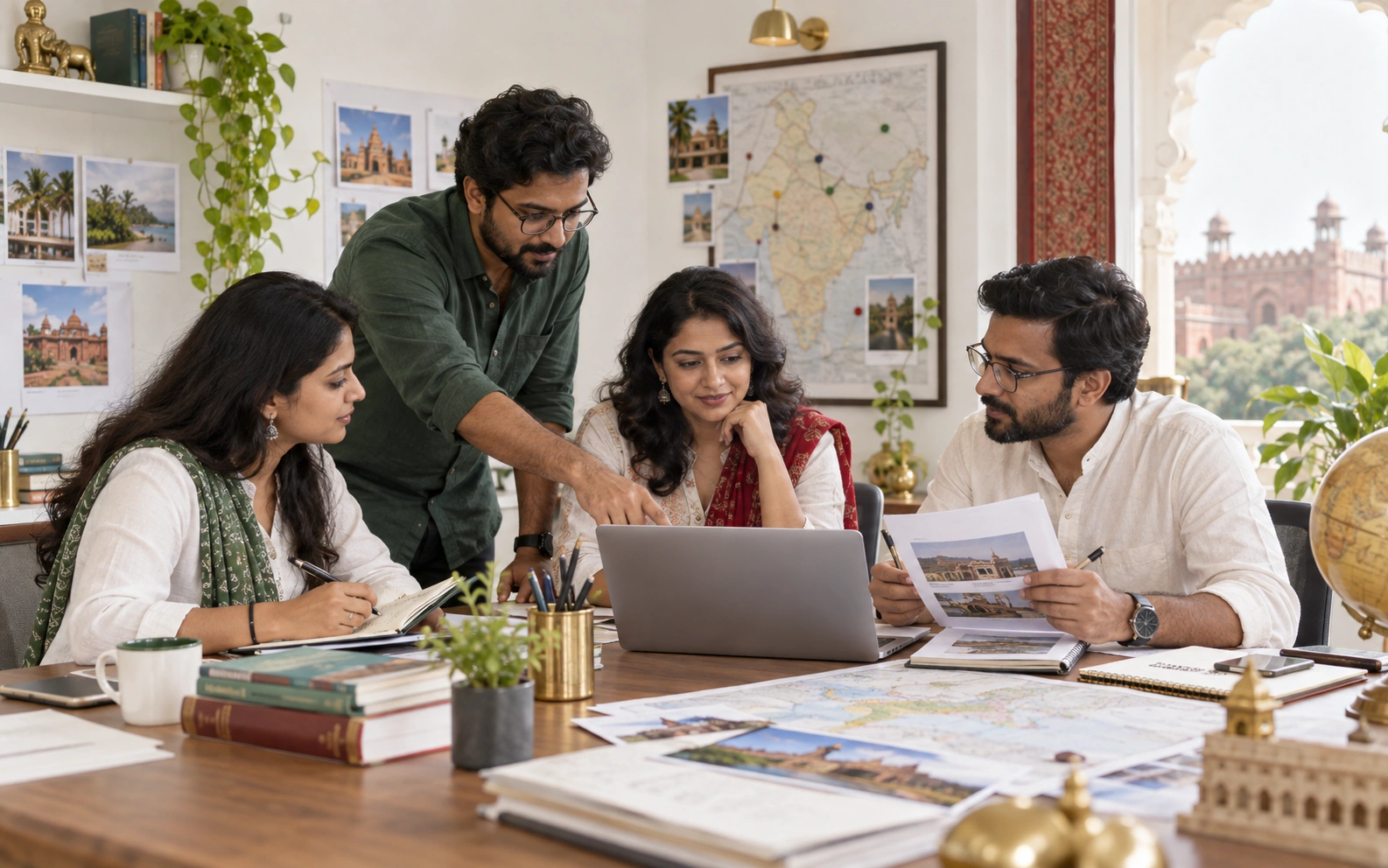
changed, not simply to make the page look newer.
High change
Operational travel information
Timings, prices, availability, road access, booking procedures and
official restrictions should be checked close to the traveller’s
decision whenever practical.
Medium change
Research summaries
Evidence sections should be revisited when important new reviews,
stronger studies or materially different findings appear.
Stable source
Historical and traditional texts
The underlying text may remain stable, while translation,
interpretation and citation quality still deserve review.
Field knowledge
Creator and local experience
Old first hand experience should not silently be treated as a current
operational fact when the destination may have changed.
Correction
Material errors
When TMG becomes aware of a meaningful error, stronger evidence or a
changed rule, the content should be reviewed rather than defended.
Integrity
No artificial date refresh
A publication or review date should not be changed only to create the
appearance that an unchanged page is newly researched.
Found something outdated?
Please use the
Thrill My Guide Contact page
and include the page, statement and source if available.
Original Research
The long term advantage is not publishing more travel articles. It is learning something useful that did not exist before.
As TMG gathers enough ethically collected and appropriately usable travel
information, original research can examine questions that ordinary
destination content rarely asks.
The topics below describe the TMG research programme and the kind of
original intellectual assets the platform is designed to develop.
They are not being presented here as completed scientific studies unless
a specific published record is linked.
Traveller Outcomes
What Indian Travellers Want Travel To Change
Study the reasons Indian travellers give for wanting to travel and
how those reasons differ by life stage, group type and journey.
Taxonomy
TMG Journey Outcome Taxonomy
Develop a structured language for outcomes such as rest,
connection, celebration, reflection, confidence and perspective.
Couple Travel
Couple Travel Compatibility Framework
Examine where couple travel preferences overlap and where itinerary
design needs to protect individual differences.
Families
Family Travel Pace Framework
Study how age, walking, transfers, children, seniors and rest
influence a family’s realistic travel pace.
Senior Travel
Senior Traveller Comfort Index
Organise factors such as walking, stairs, waiting, transfers,
seating, rest and access into clearer practical information.
Sacred Travel
Spiritual Journey Design Principles
Examine how pace, ritual, practical preparation, silence,
community and sacred meaning interact in pilgrimage design.
Destination Fit
Destination Energy And Pace Framework
Describe destinations by practical travel rhythm rather than only
attractions and popularity.
Recommendation
Traveller Fit Attributes
Build a transparent set of travel relevant attributes that can help
organise personalisation without pretending to predict a person’s life.
Research integrity note:
a framework becomes stronger when its method, data source, limitations
and version are visible.
A TMG created framework should never be called independently validated
until genuine independent validation exists.
Public Research Footprint
TMG’s thinking also exists outside this website.
Public records, presentations and published perspectives can make the
development of an idea easier to trace.
The resources below are part of Thrill My Guide’s own publication
footprint.
They show TMG’s research history, concepts and public thinking.
They are not independent endorsements, peer review or proof that a TMG
journey will produce a guaranteed personal result.
Permanent Public Record
Thrill My Guide research on Zenodo
A persistent DOI creates a durable public reference point for
TMG authored research and conceptual work.
Public Presentation
How Travel Can Redesign Your Mind, Energy and Relationships
A Thrill My Guide presentation exploring pace, reflection,
connection and the idea of designing travel around the person as
well as the place.
Published Perspective
What if you have been travelling the wrong way all along?
A wider TMG perspective on beginning with what matters in life,
then considering the journey and destination around that reason.
Important:
Zenodo hosting, SlideShare publication or Medium publication does not
mean those platforms independently verified the scientific accuracy of
TMG’s ideas.
These links are evidence of a public TMG publication footprint,
not evidence of third party scientific endorsement.
Authority With Clear Labels
Publishing our own research creates a footprint. Independent authority has to come from somebody independent.
The difference sounds small, but it protects the credibility of the whole
platform.
TMG authored
Research reports, Medium articles, presentations, frameworks and
field studies created by Thrill My Guide should be identified as
TMG authored work.
Independent source
Government information, peer reviewed studies, academic institutions,
recognised independent experts and primary external authorities can
independently support relevant claims.
Genuine third party recognition
Journalist coverage, academic collaboration, destination partnerships
and expert contributions should count only when they genuinely exist.
Thrill My Guide will not buy, invent or manufacture an authority signal
simply because it would look useful for search.
The long term goal is stronger evidence, stronger work and genuine
recognition when that work earns it.
Intelligence Domains
Research becomes more useful when it answers a real travel question.
Travel Intelligence is the evidence layer.
The resource systems below turn that evidence into practical decisions
about the destination, festival, food, shopping, safety and impact of a
journey.
Destination Intelligence
Festival Intelligence
Shopping Intelligence
Food Intelligence
Safety Intelligence
Responsible Tourism
Place
Destination Intelligence
What is this destination really like for this traveller,
in this season, with this amount of time?
Time
Festival Intelligence
What changes when a destination is experienced during an important
festival, event or sacred period?
Local Economy
Shopping Intelligence
What is genuinely worth buying, how is it connected with the place,
and how can a traveller avoid common mistakes?
Food
Food Intelligence
What should a traveller eat, when might it fit the day, what cultural
meaning does it carry and what safety issues matter?
Risk
Safety Intelligence
What current conditions, rules and personal factors can materially
affect the journey?
Impact
Responsible Tourism
How can the journey create value for the traveller without ignoring
the place, people and resources that make the journey possible?
Destination Intelligence
A destination is more than a list of attractions.
Useful destination knowledge explains what the place asks from the
traveller as well as what the place can offer.
A destination can change by season, weekday, festival date,
arrival time, group type and local conditions.
Travel Intelligence should therefore describe the living travel
environment, not only the famous places inside it.
Practical
Arrival and movement
Airports, railway stations, road time, local transport,
walking and transfers shape what can realistically fit.
Temporal
Season and timing
Heat, rain, winter, festival dates, opening times and crowd
patterns can change the same itinerary.
Cultural
Place meaning
Sacred sites, neighbourhoods, crafts, food and local customs need
context if the traveller is expected to understand them.
Human
Traveller fit
A destination can fit one traveller beautifully while being too
crowded, active, isolated or demanding for another.
Access
Accessibility reality
Stairs, walking, seating, restrooms, vehicle access and waiting time
can matter as much as the attraction itself.
Current
What changed recently?
Rules, roads, tickets, entry systems and supplier operations need
current checks when they can affect the journey.
Destination Intelligence asks a better question.
Not only, “What is famous here?”
Also, “What does this place feel like to travel through,
and who is it likely to fit at this particular time?”
Festival Intelligence
A festival can change the meaning of a destination and the practical journey at the same time.
Festival travel needs more than a calendar date.
A major festival can change opening hours, hotel demand,
road movement, crowd density, religious procedures,
clothing expectations and the emotional atmosphere of the place.
Verify
Date and schedule
Check official current information because religious calendars,
local announcements and event schedules can change.
Understand
Cultural meaning
Explain why the festival matters rather than treating it only as a
colourful event for visitors.
Prepare
Crowd and movement
Road closures, queues, public transport, security and walking may
be completely different from an ordinary day.
Respect
Local participation
Photography, clothing, sacred areas and behaviour should follow the
local context and official instructions.
Official festival source
Prefer the responsible tourism department, district administration,
temple authority or event organiser for current operational details.
Traditional source
Use religious or historical sources when explaining the meaning of
the festival, and label them correctly.
Local reality
Check what changes on the ground, including crowds, vehicle routes,
waiting and food or accommodation demand.
Traveller fit
A powerful festival experience may be exciting for one traveller and
physically difficult for another.
Official festival reference:
India’s Ministry of Tourism maintains a current
Festivals and Events
system covering events across Indian states and regions.
Local authorities should still be checked for final operational details.
Important:
a festival date found in an old article should not be treated as
current simply because the festival occurs every year.
Shopping Intelligence
The best travel purchase is not always the most photographed souvenir.
Good shopping guidance should help a traveller understand what belongs
to the place, what they are actually buying and how to make a more
informed choice.
Local shopping can support craftspeople, small businesses and local
culture. It can also expose travellers to copied goods, unclear
materials, misleading origin claims and inflated tourist pricing.
What is genuinely local?
Explain the craft, product, material or tradition connected with the
destination instead of calling every market item a local speciality.
Who made or supplied it?
Where practical, identify the maker, cooperative, authorised seller
or business rather than relying only on packaging language.
What material is it?
Textile, metal, stone, wood, food and jewellery claims can change the
value significantly.
What should it reasonably cost?
A useful guide can explain price ranges or the factors that change
price without pretending one fixed number applies everywhere.
Can I carry it home?
Weight, liquids, food, plants, religious items and fragile goods may
have transport or customs implications.
What should I check before paying?
Bill, return policy, material claim, quantity and packaging should
make sense before the traveller leaves the shop.
What Shopping Guides should eventually do
Explain what is worth considering, where the product comes from,
how to identify important differences, what a traveller should check,
and which common mistakes can be avoided.
Destination Food Intelligence
“What should I eat here?” has more than one answer.
A useful food recommendation can combine local culture,
traveller preference, food safety and the practical rhythm of the day.
Part 6 explained the evidence boundary around nutrition and health.
This section asks the destination question:
which foods help a traveller understand the place and fit the journey
they are actually taking?
Culture
What belongs to the place?
Explain local dishes, ingredients, preparation and cultural context.
Timing
When does the meal fit?
A heavy breakfast, late dinner or fasting day can change the rhythm
of a darshan or sightseeing schedule.
Preference
What does this traveller eat?
Vegetarian, Jain, allergy, no onion and garlic, religious and other
preferences should be understood before the recommendation.
Safety
Is the food handled safely?
Popularity and tradition do not replace clean preparation,
safe water and appropriate food handling.
Indian food safety context:
the Food Safety and Standards Authority of India publishes
Eat Right India guidance
that includes practical advice for eating during travel.
Traveller food safety:
the World Health Organization’s
guide on safe food for travellers
adapts the Five Keys to Safer Food for people travelling away from home.
Responsible language
Adequate, suitable meals can support comfort and normal physical
energy during a travel day.
Avoid deterministic claims
One particular dish should not be presented as automatically creating
a fixed emotion, spiritual state or guaranteed health result.
Safety Intelligence
“Safe destination” is rarely a complete sentence.
Safety depends on the traveller, the activity, the place,
current conditions and what is happening at that particular time.
Travel Intelligence therefore avoids declaring that a destination is
perfectly safe.
It looks for the specific risks that can materially affect the journey.
01
Weather
Heat, heavy rain, storms, cold, floods and visibility can change
routes and physical comfort.
02
Health
Food, water, climate, medication, access to healthcare and the
traveller’s own health can affect risk.
03
Crowds
Pilgrimages, festivals and major attractions can create another
level of waiting, movement and crowd management.
04
Transport
Road conditions, driving time, late night arrival and local transport
quality can matter more than straight line distance.
05
Rules and customs
Religious rules, local law, photography restrictions and official
instructions should be understood before the visit.
06
Accessibility
A place can be generally safe while still being difficult for a
traveller with specific mobility or medical needs.
The safety rule
Current official instructions override an older TMG page,
old itinerary, social post or general travel recommendation.
Responsible Tourism
A journey should create value without pretending the destination exists only for the visitor.
Tourism affects communities, local economies, culture,
water, waste, transport and natural environments.
Responsible travel does not require turning every holiday into a lecture.
It means noticing that the traveller is entering somebody else’s home,
environment and cultural space.
Local Economy
Keep value closer to the place
Local guides, craftspeople, restaurants and suitable small businesses
can help tourism create wider economic value.
Culture
Respect living traditions
Sacred rituals and local customs should not be reduced to a
performance only because visitors are present.
Environment
Reduce unnecessary pressure
Water, waste, transport and fragile natural areas can all be affected
by tourism demand.
Community
Host needs matter too
A useful tourism system should consider residents and workers as well
as visitors.
Access
Responsible also means inclusive
Where practical, information and journey design should consider
travellers with different access needs.
Honesty
Avoid greenwashing
A hotel, tour or product should not be called sustainable simply
because a page uses green colours or environmental language.
United Nations definition:
the United Nations describes sustainable tourism as tourism that takes
account of current and future economic, social and environmental impacts
while addressing the needs of visitors, the industry, the environment
and host communities.
Read the UN sustainable tourism resource
.
Environmental context:
the
United Nations Environment Programme
highlights tourism’s relationship with energy, water, land,
materials, waste, biodiversity and greenhouse gas emissions.
The TMG responsible travel principle
Better travel should respect the traveller and the place.
Neither needs to be sacrificed for the other.
One Knowledge System
Each TMG resource should answer a different question instead of repeating the same article in another section.
This keeps the website easier for travellers to understand and gives each
page a clear reason to exist.
Evidence
Travel Intelligence
What does research, field experience, history and traditional
knowledge actually support?
Place
Travel Guides
Where can I go, when should I go and what should I know about
the destination?
Fit
Travel Discovery
Which journey or destination fits my people, purpose,
pace and practical limits?
Product
Expert Curated Journeys
How has TMG already designed a strong version of this journey?
Human Experience
Creator Journeys
How did a real person experience this journey and what can I
learn from that blueprint?
Food
Food Guides
What should I eat, when, where and why?
Shopping
Shopping Guides
What is genuinely worth buying, where and what should I check first?
Experience
Travel Wellness
How can I use the journey more intentionally for rest,
connection, reflection and meaning?
One Rule Across Every Domain
Do not add research to make the page look intelligent. Use research to make the recommendation more useful.
Destination, food, shopping, festivals, wellness and safety all become
stronger when evidence changes what TMG actually tells the traveller.
Verify what can change
Dates, prices, routes, timings, weather and operational rules need
current sources.
Explain what needs context
Ritual, culture, food and crafts become more useful when the traveller
understands why they matter.
Label what is uncertain
Early evidence, belief, personal experience and estimates should not
sound like established fact.
Respect the person
A traveller’s mobility, health, beliefs and preferences can change
what is appropriate.
Respect the place
Local people, culture, environment and rules do not become secondary
simply because somebody is on holiday.
Keep the choice human
TMG can provide intelligence and guidance.
The final personal decision remains with the traveller.
Open Research
Travel Intelligence is written to be understood by people first and discoverable by search systems second.
There is no responsible way to guarantee that Google,
ChatGPT or another AI system will rank, cite or recommend a page.
TMG can only make the information useful, public, understandable,
crawlable and well supported.
That means avoiding hidden AI instructions and ranking tricks.
Important information stays in visible text.
Research sections have clear headings.
Sources are linked where they materially support the point.
Internal links connect related questions.
Structured data describes content that is actually visible on the page.
Google Search
Normal SEO fundamentals still matter
Crawlability, indexing, useful original information,
internal links, page experience and accurate structured data
remain the foundation for Google Search and its generative
search experiences.
AI Discovery
Public content must remain accessible
An AI search system cannot reliably discover public research
if technical controls or infrastructure prevent its crawler
from accessing the page.
Information Gain
Original value matters more than keyword repetition
TMG aims to add frameworks, first hand knowledge,
evidence classification and traveller specific thinking
instead of repeating generic destination articles.
No ranking guarantee
Being technically eligible, well researched and carefully structured
does not guarantee indexing, ranking, an AI citation, an AI Overview
mention or recommendation by any search or AI platform.
TMG measures quality by what it can control.
Trust grows from useful content, clear responsibility and a page people can actually use.
This page follows the same principle TMG applies to travel claims: use the strongest available guidance, label limits and avoid pretending any platform guarantees visibility.
Helpful, reliable content, crawlable links and technically accessible pages remain the foundation.
Clear sourcing, authorship, experience, expertise and especially trust help readers judge who is responsible for a claim.
Fast loading, responsive interaction and visual stability matter to people and are part of a strong page experience.
TMG does not add hidden keyword blocks, fabricated mentions or machine only text designed to manipulate search or AI systems.
TMG uses structured data to describe content that is actually present on the page. It does not add ratings, products, authorship or claims merely because a schema type exists.
E E A T is not an honest public 100 out of 100 score, and Google does not publish a single domain authority number that a page can manufacture. TMG therefore focuses on visible responsibility, original value, primary sources, clear claim limits, usable design, crawlable links and correction routes instead of declaring an invented score.
Reviews And Social Proof
Trust should not be manufactured because a new brand wants to look older.
Thrill My Guide does not need invented ratings, fabricated testimonials
or fake booking numbers to explain why its approach is useful.
When genuine traveller reviews or testimonials are published,
they should come from real experience and should not be rewritten
into a stronger result than the traveller actually reported.
About internal quality scores:
TMG may use an internal checklist or a 100 point internal quality
standard to review its own work.
That is an internal operating measure.
It is not a Google rating, AI certification, independent review score
or third party endorsement.
About The Source
Who is publishing Travel Intelligence?
Travel Intelligence is published by Thrill My Guide,
an Outcome First Travel Discovery Platform.
TMG starts with the traveller’s purpose, people, pace,
comfort and practical needs before treating a destination as the answer.
Its brand direction is
Travel For The Life You Want
and
Travel That Changes You.
These are positioning ideas and design principles,
not guaranteed human outcomes.
Business name
Thrill My Guide
Travel Discovery platform and journey design brand.
Principal business location
Ujjain, Madhya Pradesh, India
Public business location used across TMG trust and legal information.
Customer support
support@thrillmyguide.com
For general traveller, journey and website enquiries.
Legal and grievance contact
legals@thrillmyguide.com
For formal legal, privacy and grievance matters.
Why this information is repeated here
A research page is more trustworthy when a reader can understand
who published it, what the publisher does and where to go when
something needs correction.
Research Responsibility
Tools can assist the work. Responsibility cannot be automated away.
Travel Intelligence may use digital research tools and AI assistance
to organise information, compare sources, find gaps and improve workflow.
Material claims still require appropriate human responsibility.
Page
Travel Intelligence
Version
1.0
Last reviewed
13 September 2026
Responsible publisher
Thrill My Guide
Research method
Source matched evidence review
AI assistance
May be used as a research and workflow tool
Human responsibility
Required for material public claims
Correction route
Thrill My Guide Contact
Research is not frozen.
New evidence may strengthen, weaken or change a conclusion.
Official destination rules can also change faster than an editorial
page can be updated.
Where a current official instruction conflicts with an older TMG
statement, the current official instruction should be followed and
the TMG content should be reviewed.
If you identify a material error, outdated rule, broken research link
or important missing context, please use the
Contact page.
Frequently Asked Questions
Questions about Travel Intelligence
Short answers to the questions a traveller,
creator, researcher or partner may reasonably ask.
What is Thrill My Guide Travel Intelligence?
Travel Intelligence is TMG’s public evidence and research layer.
It examines what research, field experience, history,
traditional knowledge and real journeys can responsibly support
before those ideas become travel guidance or claims.
Does Thrill My Guide guarantee that travel will change my life?
No.
“Travel That Changes You” describes the direction in which TMG
designs meaningful journeys.
A particular emotional, relationship, spiritual, medical or
financial outcome cannot be guaranteed.
Does TMG use scientific research?
Yes, where scientific research is relevant to the question.
Travel Intelligence also uses official information,
primary historical or traditional sources, field knowledge and
first hand experience where those are the appropriate source type.
Are scriptures treated as scientific evidence?
No.
Scriptures can be authoritative sources for what a tradition,
text, philosophy or sacred narrative says.
A separate scientific source is required when a modern scientific
or medical claim is being made.
Does TMG say Vedic astrology is scientifically proven?
No.
Astrology may be offered as an optional traditional or belief based
interpretation for travellers who value it.
It is not presented as established scientific proof or as a
guaranteed predictor of health, money, relationships or future events.
Does TMG use AI in research or content creation?
AI tools may assist with research organisation,
comparison, drafting and workflow.
Important public claims still require appropriate source checking
and human responsibility.
Does a Creator Journey prove that I will get the same result?
No.
A Creator Journey can provide useful first hand knowledge about
the journey someone actually experienced.
The creator’s personal outcome remains their experience,
not a promise about yours.
Why does TMG not show a made up review score while it is a newer brand?
Because the absence of a large review history does not justify
inventing one.
TMG should publish ratings, testimonials and review counts only
when they come from genuine supportable feedback.
How often is Travel Intelligence updated?
There is no single update interval for every source.
Fast changing operational information should be checked more
frequently than stable historical or traditional texts.
Research sections should be reviewed when stronger evidence
materially changes the conclusion.
Can this page guarantee that TMG ranks number one in Google or AI?
No.
Search engines and AI platforms decide what they crawl,
index, rank, cite or recommend.
TMG can improve its eligibility and usefulness through strong
content, technical access, original information, clear sourcing
and good website structure, but it cannot guarantee placement.
What should I follow if current official information conflicts with this page?
Follow the current responsible official authority for operational
matters such as weather warnings, temple rules, transport,
access restrictions or government instructions.
Then report the conflict so TMG can review the older information.
How can I report an error or suggest stronger evidence?
Use the
Thrill My Guide Contact page
and include the page section, statement and source where possible.
From Research To Your Journey
Evidence can improve a travel decision. Your journey still needs to fit you.
Travel Intelligence explains what the available knowledge can support.
Travel Discovery turns your people, purpose, time, pace and preferences
into a clearer travel question.
The destination comes after that question, not before it.
Thrill My Guide.
Travel For The Life You Want.
Travel That Changes You.